

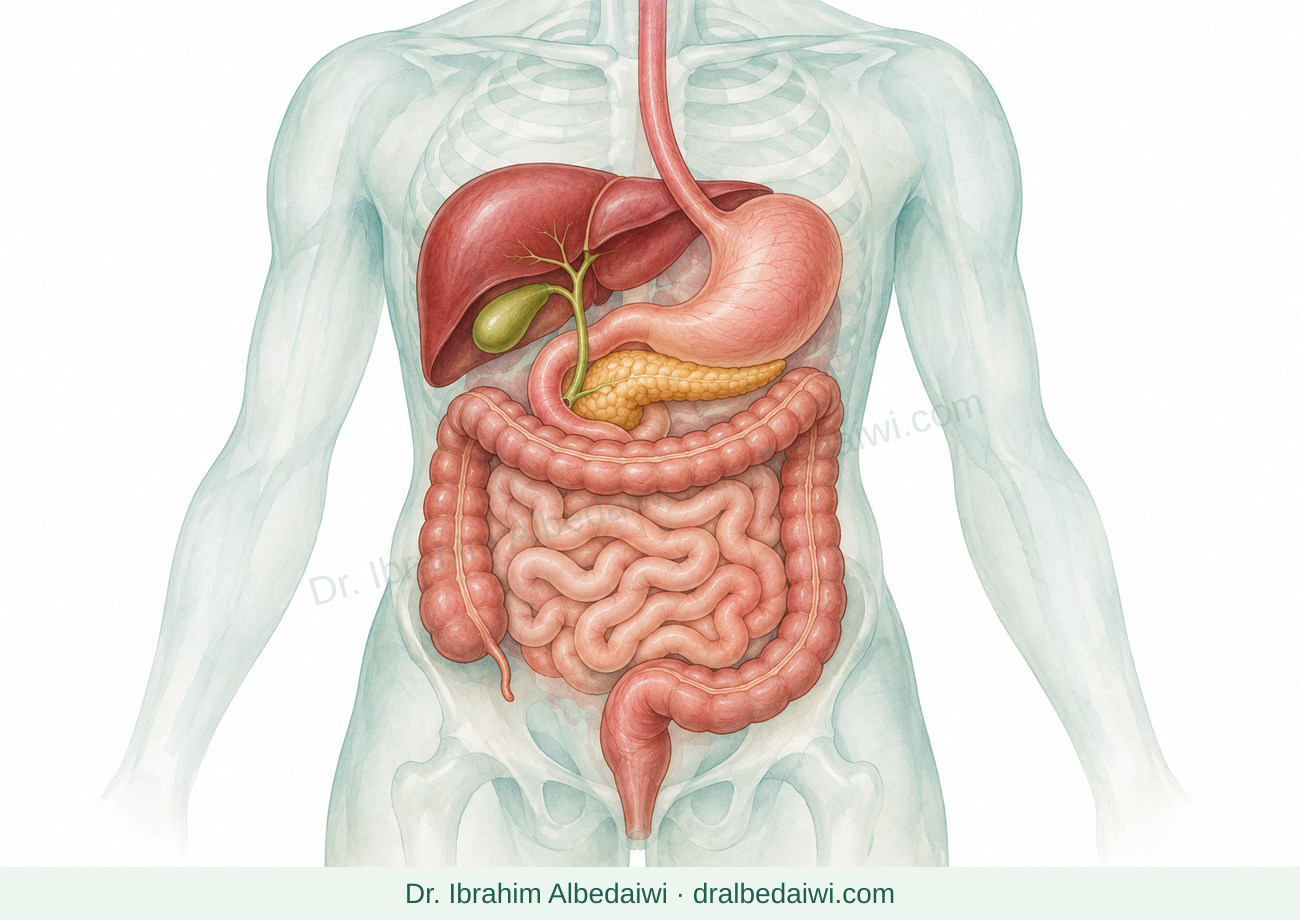

Helicobacter pylori infection
Content date: 14 November 2026
H. pylori can be treated, but pain improving does not prove the infection has gone. Complete treatment, then have a test of cure at the correct time.
Your next step
Review your dose schedule and book the test of cure at the correct time.
Get urgent help: Vomiting blood, black tarry or unusually sticky stools even without dizziness, sudden severe abdominal pain, or swelling of the face or tongue or breathing difficulty after medicine.
Understanding the infection: where does H. pylori live?
- Helicobacter pylori is a bacterium able to live in the mucus layer covering the stomach despite stomach acid. Infection may be acquired in childhood and remain for years without symptoms. In some people it causes chronic lining inflammation and can contribute to an ulcer in the stomach or duodenum, the first part of the small intestine.
- An ulcer is a break in the lining, not simply excess acidity. It may cause upper abdominal pain or burning and can bleed, but these symptoms have other causes too. Pain, bad breath or bloating alone cannot diagnose H. pylori, and a lack of symptoms does not exclude infection.
Why treat it and repeat testing?
- The infection increases the likelihood of some long-term stomach conditions, including certain tumors, but most infected people do not develop cancer. Once infection is confirmed, your doctor chooses eradication treatment to help ulcers heal, reduce recurrence and lower some future risks.
- Breath testing or stool antigen testing detects active infection, which may also be found on endoscopic biopsies. Improvement after medicine does not prove eradication; acid treatment can relieve pain while bacteria remain. Some regimens fail because of antibiotic resistance or difficulty completing treatment, so a timely test of cure and an alternative plan for persistent infection are necessary.
How is it detected?
- By a breath test or stool test for the bacterium, or biopsies during endoscopy when needed.
- Blood antibodies may remain positive after cure, so they are generally unsuitable for confirming eradication.
How can I make treatment successful?
- Treatment usually combines several medicines, including antibiotics and an acid-reducing medicine, sometimes with bismuth, often for 14 days according to the prescription.
- Tell your doctor about drug allergies, pregnancy and any antibiotics previously taken. Do not repeat an old prescription or use a family member’s treatment.
- Use a dose schedule. If a problem occurs or you miss a dose, check the medicine instructions or ask your pharmacist; do not double doses yourself.
The test of cure
- This is usually performed at least 4 weeks after finishing antibiotics and bismuth, with proton pump inhibitors or potassium-competitive acid blockers stopped for about 2 weeks as directed by your doctor.
- Do not stop acid treatment without a plan if you have a complicated ulcer or another important reason to continue. Your doctor may prescribe a temporary alternative; also follow the laboratory instructions.
- If the test stays positive, we choose another plan based on previous treatment and may need antibiotic susceptibility testing.
Food and prevention
- No food or herb eradicates the infection instead of treatment. Choose foods you tolerate and avoid smoking.
- Wash your hands and use safe food and water. Isolation or separate dishes are not necessary. Discuss testing adult household members with a test for active infection, even if they have no symptoms. Testing recommendations differ for children; do not automatically apply the adult plan to them.
- Bismuth can darken the tongue or stool. However, black, tarry or unusually sticky stool may indicate bleeding and needs urgent assessment even without dizziness or weakness; do not automatically attribute it to the medicine.
Before testing for H. pylori
- PPIs can cause a false-negative H. pylori test, including stomach biopsy tests. For planned testing, they are usually paused for 14 days with medical approval, with 4 weeks without antibiotics or bismuth. Do not interrupt essential treatment yourself; not every gastroscopy requires stopping PPIs. A negative result during treatment may need confirmation by a breath or stool test after an appropriate interval. See My medicines before endoscopy.
From treatment to confirmed clearance
- Finish the prescribed course
Follow the prescribed doses and duration, and record your last dose date.
- Plan the follow-up test
Allow at least 4 weeks after antibiotics and bismuth, with a clinician-approved plan to pause PPIs or P-CABs for about 2 weeks before testing.
- Confirm clearance
Usually use a breath or stool test; pain improving alone does not confirm cure.
Arrange these dates with your team; do not stop essential treatment yourself. Do not wait for follow-up testing if bleeding or severe deterioration occurs.
Dr. Ibrahim Albedaiwi · dralbedaiwi.comMake sure the result is reviewed
Record the treatment end date, planned test date, and who will review the result. If the result has not arrived by the agreed date, contact the treating facility. No message does not mean the result is normal. A positive result needs a new treatment review, not repetition of leftover antibiotics.
After H. pylori treatment

Read the illustration as text
Feeling better does not prove cure
- Finish prescribed treatment: Record the last antibiotic and bismuth dose dates.
- Allow enough time: Test at least 4 weeks after antibiotics and bismuth.
- Review acid medicines: Agree a 2-week break from PPIs/PCABs before testing.
- Confirm the result: Breath or stool antigen test; agree who reviews the result.
Follow your clinician’s medicine plan.
When to get help
Vomiting blood, black tarry or unusually sticky stools even without dizziness, sudden severe abdominal pain, or swelling of the face or tongue or breathing difficulty after medicine.
Vomiting preventing completion of treatment, a rash or severe diarrhea during antibiotics; contact the team promptly to adjust treatment safely.
Guides for your care journey
Read the related guides together:
Related guides
Acid medicines: proton pump inhibitors (PPIs)