

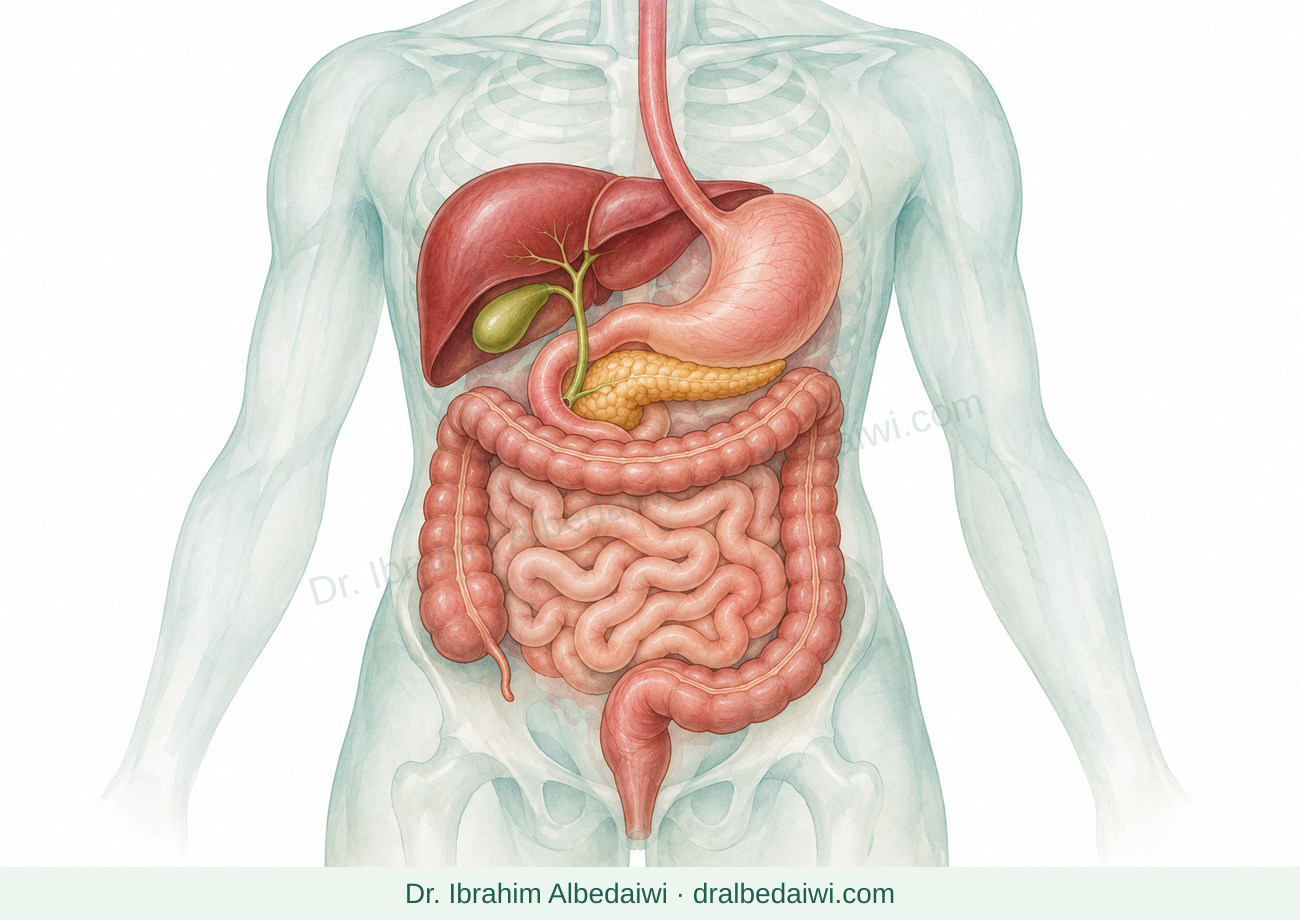

Colorectal cancer screening
Content date: 10 November 2026
Screening is performed before symptoms develop. Blood in stool, anemia or a persistent change in bowel habits requires diagnostic assessment rather than waiting for routine screening.
Your next step
Clarify your risk and screening date, and follow every positive result through to the required colonoscopy.
Get urgent help: Heavy bleeding, fainting, severe pain with swelling and vomiting or inability to pass gas, or black, tarry stool even without dizziness.
Why screen when I feel well?
- Colorectal cancer is uncontrolled growth of cells in the large bowel lining. Many cancers begin as certain polyps that change gradually over time, although most polyps are not cancerous when discovered. Polyps and early cancers may cause no obvious symptoms.
- Screening before symptoms can detect an early cancer that is easier to treat, or find and remove a polyp before it changes. Feeling well or having no affected relatives does not remove the benefit of screening when due. Family or personal history may mean starting earlier or having closer follow-up.
Stool testing versus colonoscopy
- FIT detects small amounts of blood in stool that you cannot see. It does not show the colon or remove polyps. Colonoscopy examines the lining, takes samples and can remove many polyps during the same procedure. Each option has different preparation, repetition and advantages; the choice depends on risk and health.
- A positive stool test does not diagnose cancer. It signals the need for further investigation, usually colonoscopy. A negative test does not provide permanent protection or explain visible bleeding or weight loss. Symptoms change the task from screening to diagnostic assessment, and the required tests may differ regardless of age or the last screening date.
Who should start screening?
- The Saudi program generally targets symptom-free adults at average risk aged 45–75. Your doctor discusses timing according to your health and previous tests. Average risk means there are no factors requiring earlier assessment, such as a significant family history or previous polyps.
- Family history, previous polyps, chronic colitis or inherited syndromes may require an earlier, different plan.
What are the options?
- The fecal immunochemical test (FIT) uses a stool sample collected at home and is usually repeated yearly after a negative result in average-risk people.
- Colonoscopy examines the lining and allows polyp removal. After a normal, high-quality examination, the interval may be ten years for average-risk people, but findings may require a shorter interval.
- Choose the appropriate test with your doctor. Do not assume these intervals apply if you have symptoms or risk factors.
What does the result mean?
- A positive FIT does not necessarily mean cancer, but usually needs colonoscopy. Repeating FIT to obtain a negative result does not replace the required colonoscopy.
- A negative FIT does not rule out every tumor or explain symptoms. Continue assessment if worrying signs persist.
Collecting the stool sample
- Follow the kit instructions and do not mix the sample with urine or toilet water. Label it and return it within the specified time.
- If you have visible bleeding, are menstruating or think the sample may be contaminated, contact the service before collecting it. Do not stop blood thinners or other medicines yourself.
Prevention and follow-up
- Tell your doctor which relative was affected and their age at diagnosis. Keep colonoscopy and polyp pathology reports.
- Be physically active, avoid smoking and limit processed meat within a balanced diet. Lifestyle does not replace screening when due.
- Arrange follow-up of the result. If the test is positive, do not delay colonoscopy because you feel well or assume the blood comes from hemorrhoids.
When to get help
Heavy bleeding, fainting, severe pain with swelling and vomiting or inability to pass gas, or black, tarry stool even without dizziness.
Recurring blood in stool, anemia, weight loss, persistent changes in bowel habits, or a positive FIT requiring colonoscopy arrangements.