

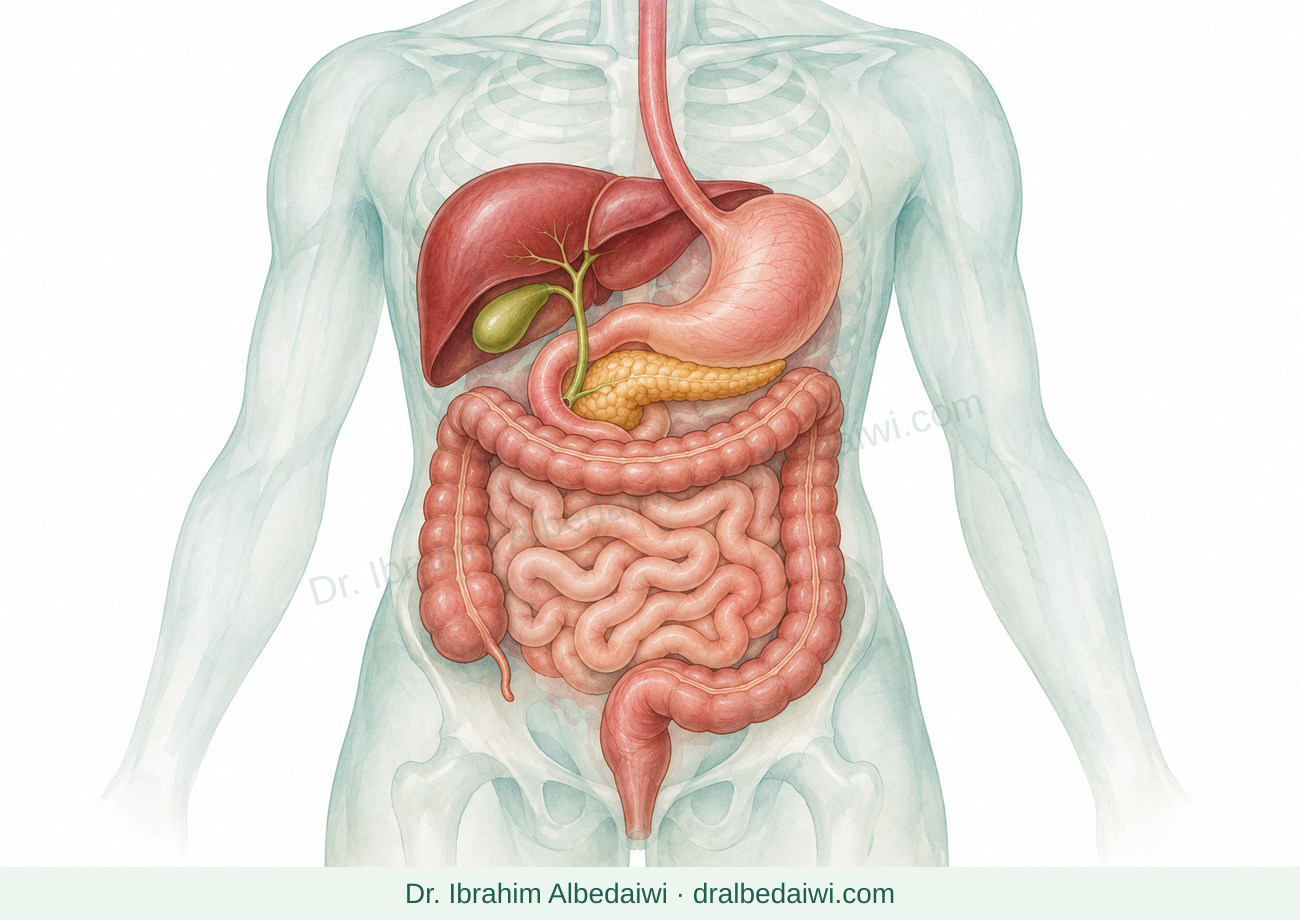

Ulcerative colitis
Content date: 13 November 2026
Controlling inflammation protects the colon and reduces flares. Continue your remission-maintenance treatment even when bleeding stops and bowel movements return to normal.
Your next step
Continue your remission-maintenance treatment, and record bowel movement frequency and any blood to help assess a flare.
Get urgent help: Frequent bloody diarrhea with fever, a racing heartbeat or severe weakness; severe pain and swelling, heavy bleeding, or inability to drink fluids.
Understanding the condition: what exactly happens?
- Ulcerative colitis is a chronic inflammatory bowel disease. An abnormal immune response causes inflammation and ulcers in the inner lining of the colon, which absorbs water and stores stool. The disease usually begins in the rectum and may extend continuously through part or all of the colon.
- It differs from Crohn’s, which can affect the small intestine or other locations and extend deep into the bowel wall. It also differs from irritable bowel syndrome: ulcerative colitis involves actual inflammation in the tissue. It is not contagious and is not simply caused by spicy food or emotional stress, although some circumstances may worsen symptoms.
Why do bleeding and urgency occur, and what is remission?
- The inflamed lining bleeds more easily and functions less effectively, causing diarrhea with blood or mucus. You may feel an urgent need to pass stool or a sense that the bowel has not emptied completely, even when only a small amount passes. A flare may cause tiredness and anemia, and sometimes symptoms in the joints, skin or eyes.
- Diagnosis is usually confirmed by colonoscopy and biopsies after excluding causes such as infection. There are periods of active disease (flares) and inactive disease (remission). We aim to stop bleeding and diarrhea and heal the lining, then prevent inflammation from returning. Treatment intensity depends on disease severity and extent; few symptoms do not mean you can stop maintenance treatment without review.
Active disease or remission?
- A flare means increased disease activity, often with more symptoms. In remission, activity settles and symptoms are absent or minimal. Tests may still be needed to assess inflammation; continue treatment and follow-up as planned.
ILLUSTRATED PATIENT GUIDE
Crohn’s disease and ulcerative colitis
Darker areas show example sites of inflammation, not a measure of disease severity.
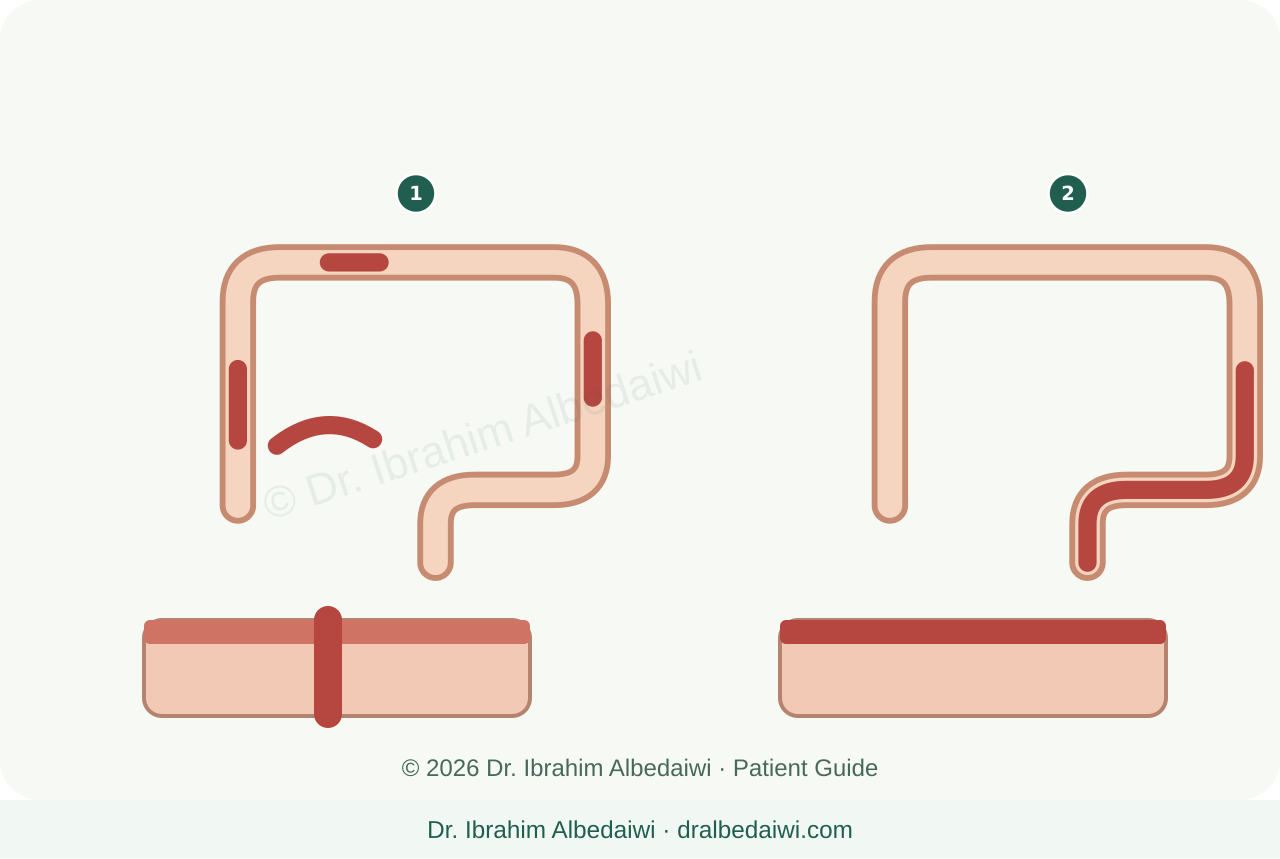
- 1 · Crohn’s disease
Can affect any part from mouth to anus, commonly the small bowel and colon. Inflamed areas may be separated by healthy bowel, and inflammation can involve the full bowel wall.
- 2 · Ulcerative colitis
Affects the colon and rectum. It usually starts in the rectum and extends continuously, mainly affecting the inner lining.
Both can have active periods and periods of remission. These are general patterns; tests, endoscopy and biopsies establish the diagnosis.
© 2026 Dr. Ibrahim Albedaiwi · Original patient illustrationsTreating flares and maintaining remission
- Mesalazine is an important treatment for mild to moderate disease, taken orally or as suppositories or enemas depending on where inflammation is located. Your doctor may combine oral and rectal forms, with kidney function monitoring.
- Corticosteroids are short-term treatment for a flare, not long-term maintenance of remission; follow the tapering plan. Immunomodulators such as azathioprine may be used for maintenance or alongside certain biologics, and require monitoring tests.
Biologic and targeted treatments
- Biologics target specific parts of the inflammatory process and are given by intravenous infusion or injection under the skin. Examples include infliximab, adalimumab, vedolizumab, ustekinumab and risankizumab. We may choose them early for moderate or severe disease; they are not necessarily a last resort.
- Targeted tablets are also available for some patients, with particular precautions concerning infection, blood clots and pregnancy depending on the medicine. Your team chooses treatment after reviewing your condition, tests and vaccinations.
Using treatment safely
- Continue maintenance treatment even when you improve. If you have a fever or infection, contact your team before the next dose, and do not double a missed dose. Injection, storage and monitoring instructions differ between medicines; open your medicine card in the related guides below.
How do we know treatment is working?
- We monitor symptoms, blood tests and fecal calprotectin (an inflammation marker), with endoscopy when necessary. We may check for infection if your condition worsens.
- Some medicines require blood, liver or kidney monitoring even when symptoms improve.
Food and activity that suit you
- Eat balanced meals and drink enough fluids. During a flare, choose foods you tolerate easily and avoid prolonged highly restrictive diets without a dietitian.
- Not everyone needs to avoid milk or gluten; adjust food according to tolerance and diagnosis. Treat iron deficiency and nutritional deficiencies based on your tests.
- Avoid anti-inflammatory painkillers such as ibuprofen without advice. Do not use anti-diarrheal medicines during a severe bloody flare or abdominal swelling without medical direction.
Protecting your long-term health
- Discuss vaccinations and infection screening before immunosuppressive medicines. Tell your team if you are pregnant or planning pregnancy before changing treatment.
- Regular colonoscopies for bowel cancer surveillance may be needed after years of disease; timing depends on the duration and extent of inflammation and other risk factors.
- Surgery may be the best option for complications or inflammation that does not respond to treatment; your team will discuss the alternatives with you.
Care between flares
Review my vaccination, screening and preventive-care checklist
When to get help
Frequent bloody diarrhea with fever, a racing heartbeat or severe weakness; severe pain and swelling, heavy bleeding, or inability to drink fluids.
More bleeding or bowel movements than usual; contact your team early rather than waiting for a severe flare.
Guides for your care journey
Read the related guides together:
Related guides
Biologic infusions: what to expect
Nutrition with Crohn’s disease and ulcerative colitis
Pregnancy and breastfeeding with bowel and liver disease
Mesalazine / mesalamine medicine card
Budesonide MMX 9 mg / Cortiment
Probiotics: when can they help?
Understanding faecal calprotectin results