

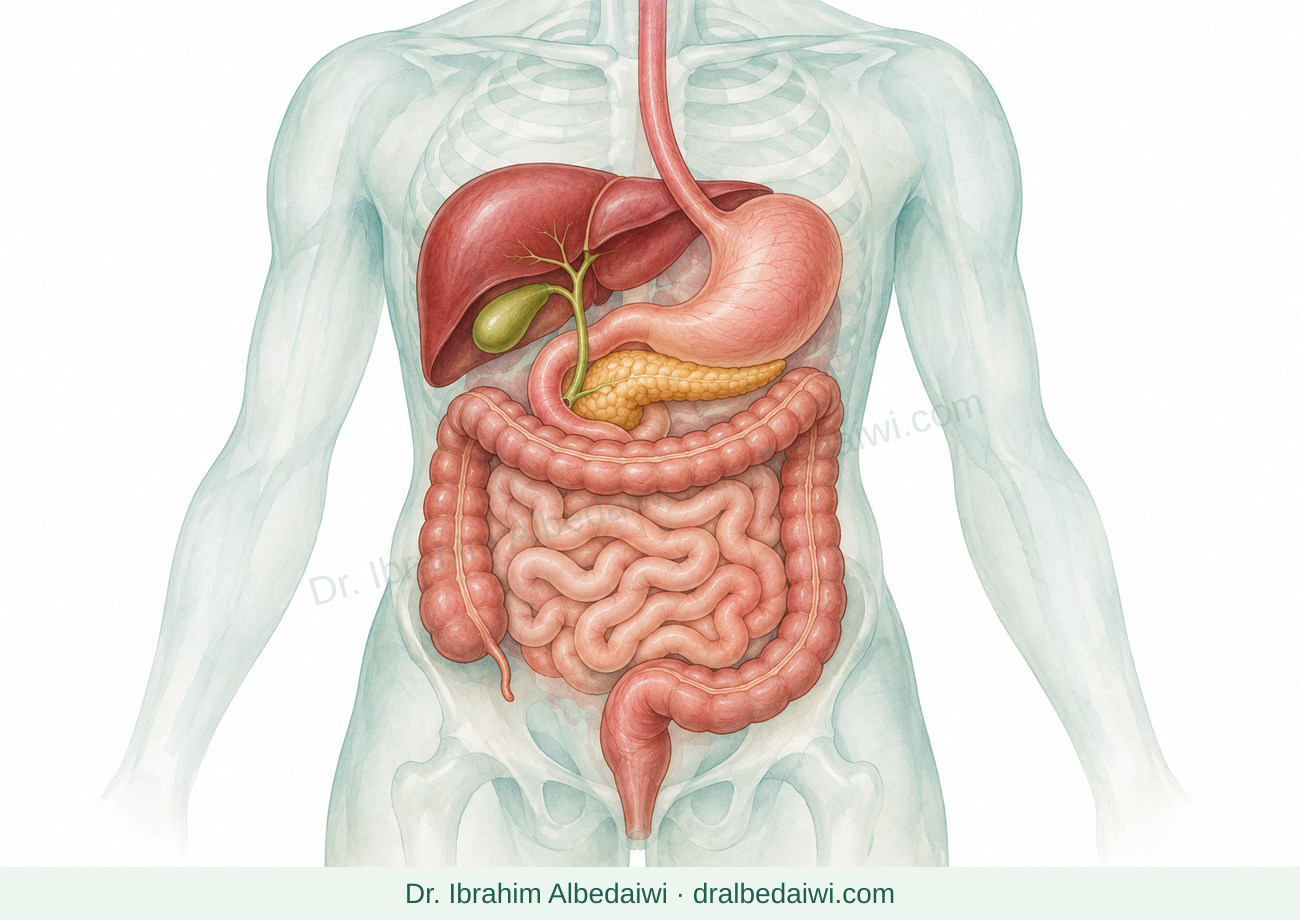

Diverticulosis and diverticulitis
Content date: 10 November 2026
Having diverticula is different from having inflamed diverticula. Most do not cause problems, but new pain with fever needs medical assessment.
Your next step
Ask about food during the attack and your follow-up appointment after recovery.
Get urgent help: Severe or worsening pain with fever, a rigid or markedly swollen abdomen, vomiting that prevents drinking, fainting or heavy bleeding. Diverticular bleeding can be painless.
Understanding the condition: a pouch is not a polyp
- Diverticula are small pouches that bulge out through weak points in the colon wall. They resemble side pockets, whereas a polyp grows into the inside of the colon. Diverticula become more common with age. Many people have no symptoms and discover them during a scan or colonoscopy performed for another reason.
- Having these pouches is called diverticulosis; inflammation of a pouch is called diverticulitis. Some diverticula can bleed without obvious inflammation. These are different conditions, so everyone with diverticula on a report does not need the same treatment, and not every episode of bloating or pain is automatically due to them.
Recognizing an attack and what to expect afterwards
- Diverticulitis usually causes persistent lower abdominal pain, often on the left, sometimes with fever or a change in bowel habits. Examination, blood tests and imaging when needed help distinguish localized inflammation from complications such as an abscess, perforation or blockage.
- Many uncomplicated attacks improve without surgery. Antibiotics are selected according to severity, immune function and other factors. Pouches may remain after recovery; that does not mean inflammation is continuing. The focus is on suitable food, regular activity, and deciding whether follow-up colonoscopy or surgery is needed for your situation.
How is severity assessed?
- Assessment uses examination and tests; a CT scan may be needed to confirm the diagnosis and look for an abscess or complications.
- Not every pain in someone with diverticula is diverticulitis. Colonoscopy is not usually performed during an acute attack to diagnose it.
Treatment depends on severity
- Some uncomplicated attacks can be treated outside hospital with monitoring, appropriate food and prescribed pain relief. Not everyone needs antibiotics.
- Antibiotics or hospital care may be needed for severe illness, weakened immunity or complications. An abscess or perforation may require a procedure or surgery.
During an attack and after improvement
- Your doctor may temporarily recommend clear fluids or light food as tolerated, followed by gradually returning to food as you improve. Do not continue on fluids alone for days without review.
- Contact the team if pain is not improving or you cannot gradually resume usual food or drink fluids. Do not restart leftover antibiotics yourself.
- After recovery, increase fiber gradually within a balanced diet, stay active, maintain a suitable weight and stop smoking.
Common questions
- You do not usually need to avoid nuts, seeds or popcorn simply because you have diverticula; adjust them if they personally disagree with you.
- Avoid repeated use of painkillers such as ibuprofen without advice.
- Colonoscopy is recommended after recovery from complicated diverticulitis. After an uncomplicated attack, the decision depends on warning symptoms, whether screening is due and the quality of previous colonoscopies. It is usually delayed for 6–8 weeks or until symptoms have fully resolved, whichever is longer. Surgery is not decided by the number of attacks alone.
When to get help
Severe or worsening pain with fever, a rigid or markedly swollen abdomen, vomiting that prevents drinking, fainting or heavy bleeding. Diverticular bleeding can be painless.
Failure to improve with the plan, returning pain, or uncertainty about whether you need colonoscopy after recovery.