

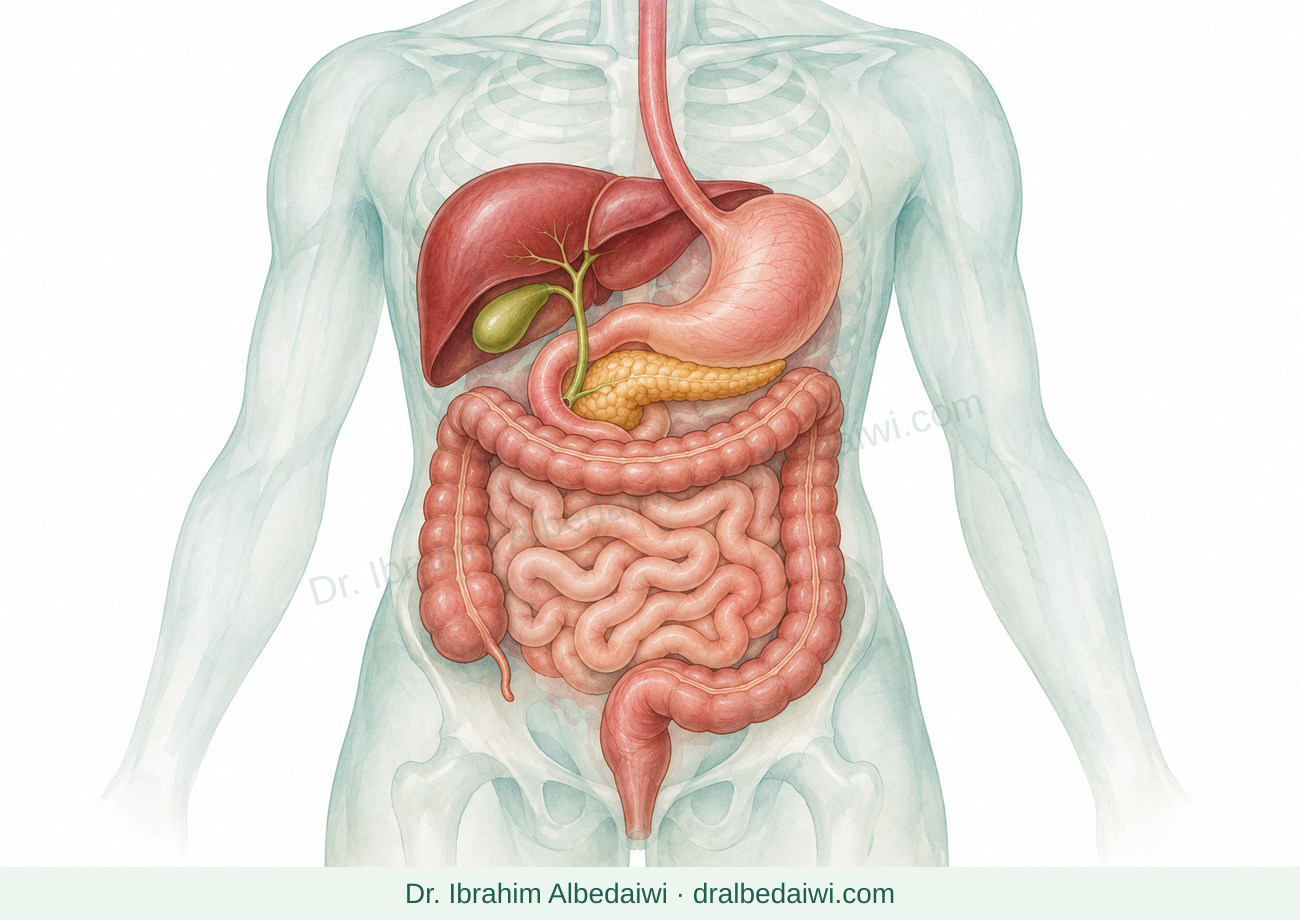

Liver cancer: diagnosis and treatment
Content date: 14 November 2026
A liver spot does not automatically mean cancer. If cancer is confirmed, treatment depends on its type, extent, liver function and overall health. Treatment with the aim of cure may be possible.
Your next step
Ask whether the cancer started in the liver or spread there, and how liver function affects treatment.
Get urgent help: Vomiting blood, black tarry stools, new confusion, sudden severe abdominal pain even without dizziness or fainting, or fever with marked deterioration need urgent care. During chemotherapy, a temperature of 38°C or higher requires immediate contact with the oncology team or emergency care; do not wait for a message reply.
Which cancer does this mean?
- Hepatocellular carcinoma (HCC) starts in liver cells. Risk increases with cirrhosis, meaning stage F4 scarring, and it can occur with hepatitis B without cirrhosis. Other primary cancers, including bile duct cancer, need different treatment.
- Cancer that started in the colon or pancreas and reached the liver is metastatic cancer from that organ; it does not become HCC. Establishing the origin is essential. Many spots discovered on scans are benign.
Symptoms and surveillance
- Early cancer may cause no symptoms. Weight or appetite loss, persistent upper abdominal pain, swelling or jaundice can occur, but may also result from liver disease or other conditions.
- Surveillance means scheduled checks before symptoms for people at sufficient risk, usually ultrasound with AFP every six months. Investigating an existing liver spot is different; do not delay that assessment until the next routine scan.
Confirming the diagnosis
- Diagnosis may require contrast-enhanced MRI or CT with dedicated liver imaging phases. In selected people at risk, a characteristic scan pattern can diagnose HCC without biopsy. Others need a tissue sample.
- AFP is a blood protein. A raised result does not establish cancer, and a normal result does not exclude it. AFP does not replace imaging.
- Assessment includes tumor number, size, blood vessel involvement and spread, together with liver function, abdominal fluid, varices and activity level. Size alone cannot establish the stage or best treatment.
Treatment choices
- Liver, oncology, surgical and interventional radiology specialists discuss the case, with transplant specialists when appropriate. Options include removing the tumor, liver transplantation or ablation to destroy it. These may aim for cure in selected situations.
- Other options include treatment delivered through a catheter, radiotherapy, immunotherapy or targeted medicines. Treatments may be combined or used in sequence. Liver function, bleeding risk, other conditions and availability affect selection.
- Ask whether the goal is cure, shrinking the cancer to enable another treatment, or disease control and symptom relief. A cancer diagnosis does not automatically mean treatment is impossible; two patients may need different plans.
Protecting the liver and nutrition
- Continue treatment for the underlying liver disease as prescribed; do not stop antiviral medicine yourself. Avoid alcohol and unknown herbal products, and review all medicines and supplements with the team.
- Eat regularly with suitable protein, and request dietitian support for weight or muscle loss. With ascites, follow your individual salt, fluid and diuretic plan. Treat pain, nausea and anxiety early; supportive care is part of cancer treatment.
Follow-up
- Scans and blood tests assess response and possible recurrence on a schedule set by your team. Improved AFP alone is insufficient. Keep scan images, any biopsy report, result appointments and contact details.
Understanding treatment names
| Treatment | What it does | Useful question |
|---|---|---|
| Removal or transplantation | Surgery removes a liver segment containing the tumour; transplantation replaces the liver in selected patients. | Can this aim for cure, and is enough healthy liver available? |
| Thermal ablation (RFA or microwave) | An image-guided probe heats and destroys a targeted tumour. Location matters as well as size. | Is the tumour safely reachable, and when is the response scan? |
| Chemoembolization (TACE) | A catheter delivers treatment into selected tumour-feeding arteries, combining chemotherapy with reduced blood supply. | Is liver function adequate, and when will the team decide whether another session helps? |
| Radioembolization (TARE / Y-90) | A catheter delivers tiny radioactive particles to a selected liver area. Planning is required. | How does this differ from TACE for my situation? |
| External radiation or medicines | Focused radiation, immunotherapy or targeted medicines may be chosen according to the overall assessment. | What is the goal, and which side effects require immediate contact? |
A bridging treatment controls a tumour while awaiting transplantation; downstaging aims to bring it within transplant criteria. Neither guarantees transplantation. This table explains terms, not eligibility. The specialist team balances tumour features, liver function, general health and your preferences.
When to get help
Vomiting blood, black tarry stools, new confusion, sudden severe abdominal pain even without dizziness or fainting, or fever with marked deterioration need urgent care. During chemotherapy, a temperature of 38°C or higher requires immediate contact with the oncology team or emergency care; do not wait for a message reply.
New jaundice or swelling, continued weight loss, uncontrolled pain or a scan result without a clear plan: contact the team early.
Related guides
Benign liver lesions and cysts