

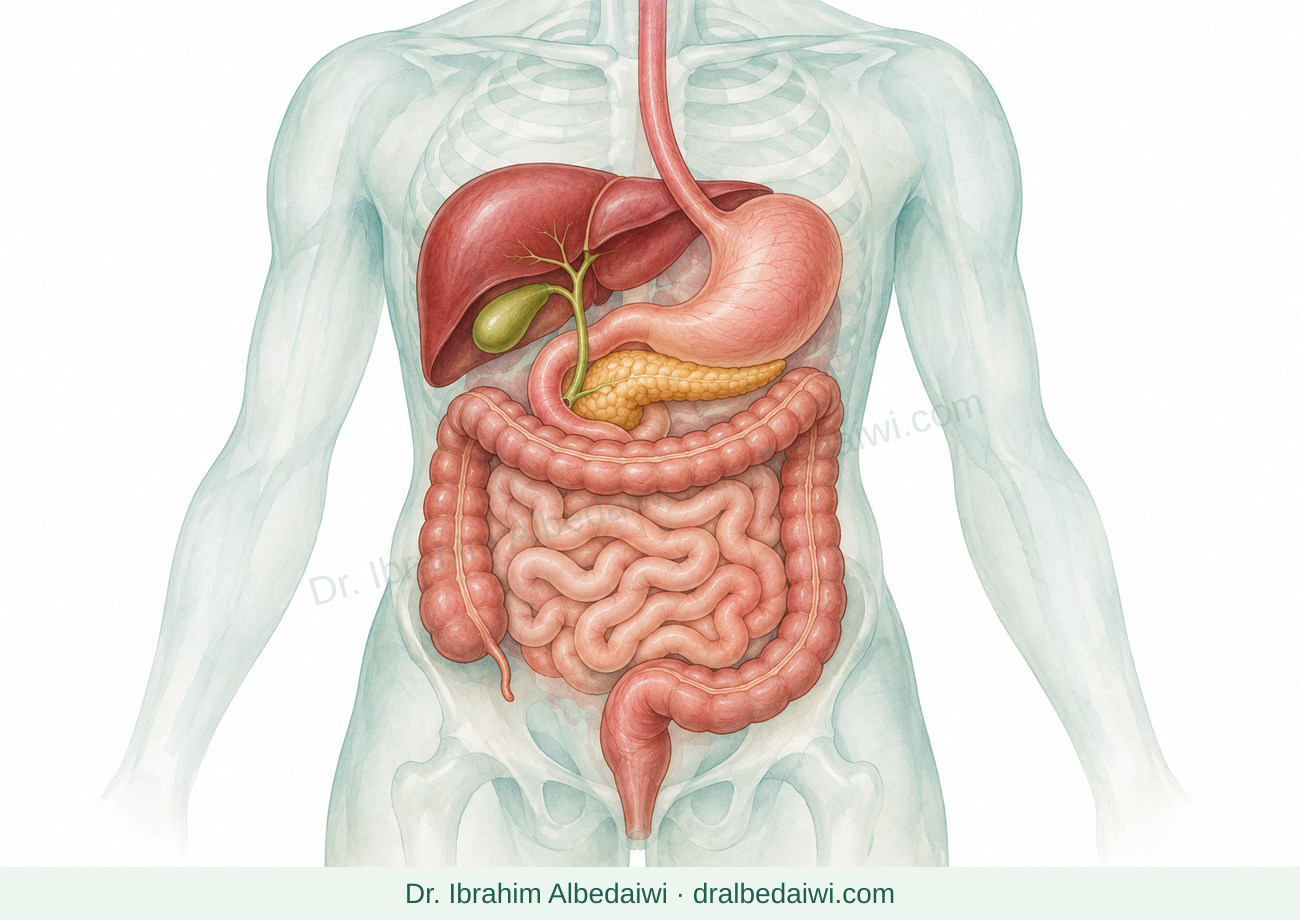

Follow-up after bariatric and stomach surgery
Content date: 15 November 2026
Reaching your target weight does not end follow-up. Your operation determines long-term nutrition, supplements and tests.
Your next step
Record your operation, supplements, next tests and who will review them.
Get urgent help: Increasing severe pain, inability to retain fluids, fainting, confusion, or new walking or vision problems: seek emergency assessment. Neurological symptoms need urgent assessment even without vomiting.
Why does follow-up continue?
- Sleeve gastrectomy, gastric bypass and partial gastrectomy can change food intake and absorption. Deficiencies may develop without obvious symptoms. Follow-up considers strength, diet and medicines as well as weight.
Your follow-up checklist
- After bariatric surgery, nutritional review and monitoring should continue at least annually once stable, and more often when needed. Confirm who takes responsibility after surgical follow-up.
- Monitoring may include blood count, iron, vitamin B12, folate, vitamin D and calcium, with additional tests tailored to the procedure and clinical situation. Continue prescribed supplements; feeling well does not establish that they are unnecessary.
Food and medicines
- Follow your team’s texture stages, eat slowly and maintain adequate protein. Diabetes or blood-pressure treatment and absorption of some medicines may change; review them with your clinician and pharmacist rather than crushing or switching products yourself.
- Dumping can cause cramps, palpitations or diarrhoea after food, sometimes followed by low glucose hours later. Not every postoperative symptom is dumping; use the linked food guide without imposing an overly restrictive diet.
Persistent vomiting needs assessment
- Repeated vomiting, swallowing difficulty or poor intake can cause thiamine (vitamin B1) deficiency. Seek early assessment and clinician-directed treatment; do not wait for routine blood tests or a distant appointment. Provide your operation type and date.
After bariatric surgery
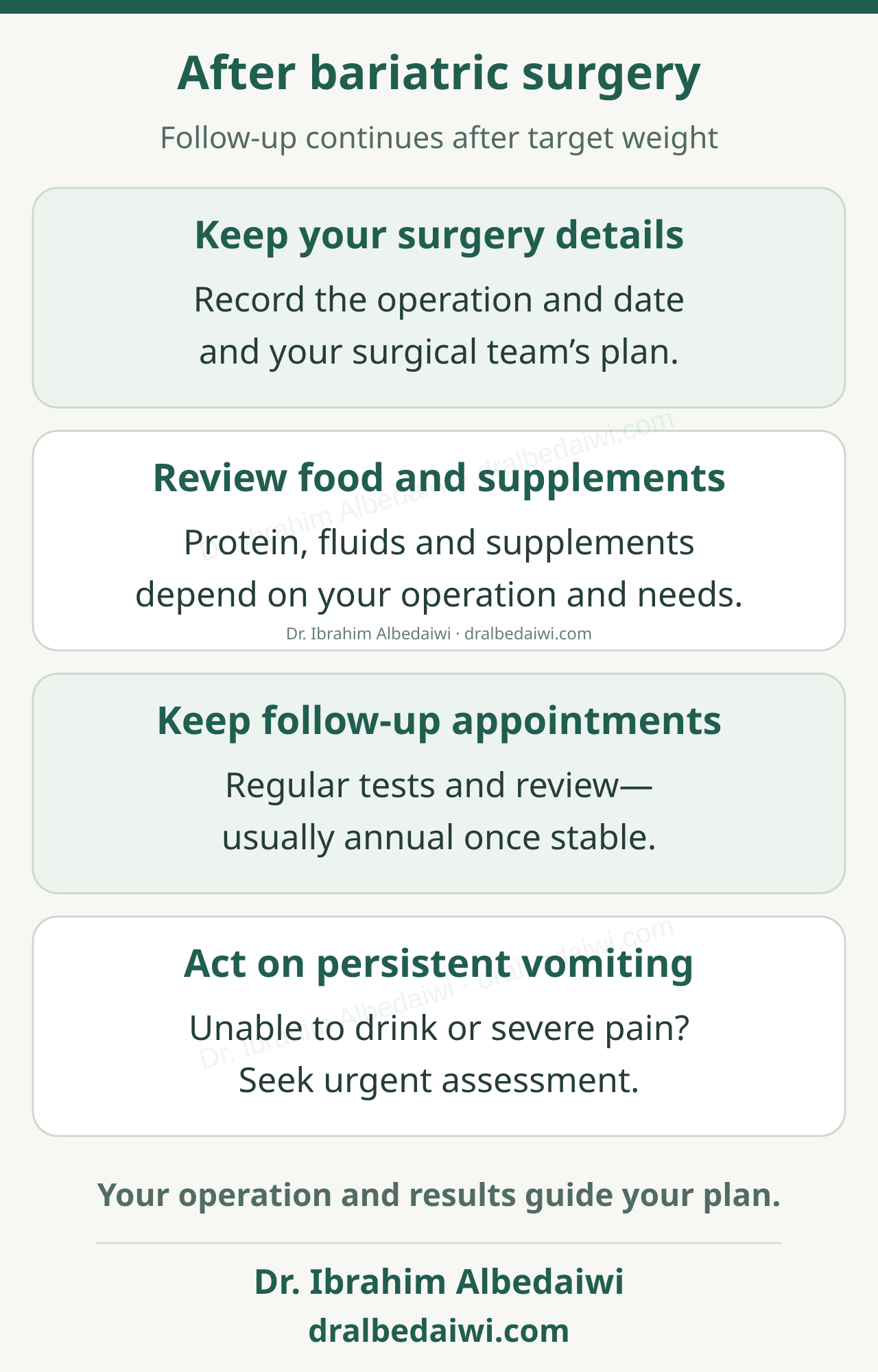
Read the illustration as text
Follow-up continues after target weight
- Keep your surgery details: Record the operation and date and your surgical team’s plan.
- Review food and supplements: Protein, fluids and supplements depend on your operation and needs.
- Keep follow-up appointments: Regular tests and review— usually annual once stable.
- Act on persistent vomiting: Unable to drink or severe pain? Seek urgent assessment.
Your operation and results guide your plan.
When to get help
Increasing severe pain, inability to retain fluids, fainting, confusion, or new walking or vision problems: seek emergency assessment. Neurological symptoms need urgent assessment even without vomiting.
Repeated vomiting, swallowing difficulty, new fatigue or tingling, or inability to tolerate supplements: contact your team promptly.
Related guides
Eating after stomach surgery: dumping syndrome