

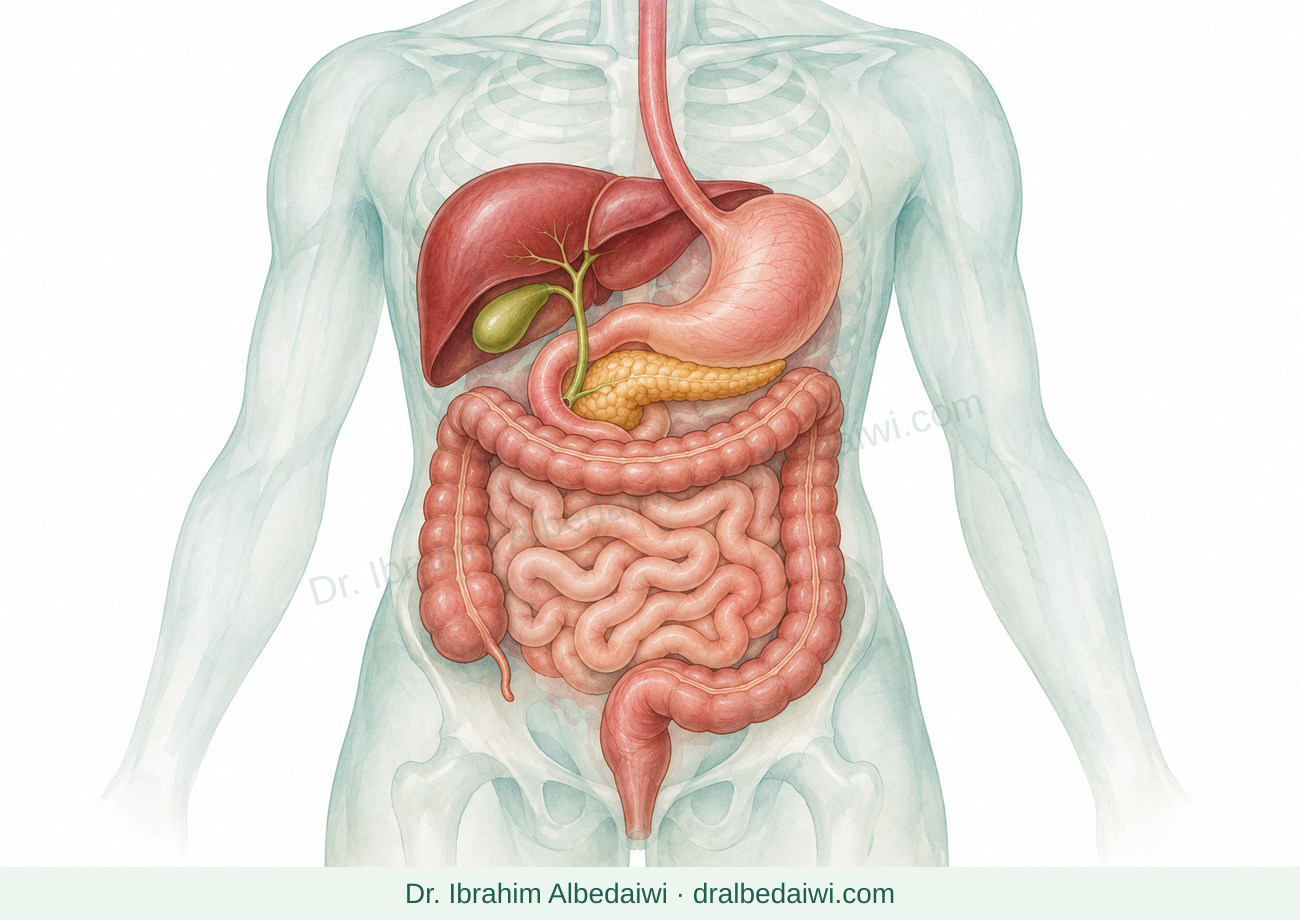

Iron deficiency, anemia and the digestive system
Content date: 14 November 2026
Replacing iron is important, but finding the reason for the deficiency matters too. Digestive investigations may be needed even without pain or visible bleeding.
Your next step
Bring previous results and the names of blood thinners and painkillers. Ask about the cause of the deficiency and when to repeat tests.
Get urgent help: Chest pain, severe breathlessness or breathlessness at rest, fainting, vomiting blood or obvious bleeding.
Understanding the condition
- Iron deficiency means low iron stores and can occur before anemia develops. Anemia means hemoglobin is below the normal range and may cause tiredness, palpitations or reduced exercise tolerance. Not all anemia is caused by iron deficiency.
- Iron may be low because of blood loss, low intake or poor absorption, for example in celiac disease. Bleeding from the digestive tract may be hidden and not visible. In women, we also review menstrual bleeding without assuming it is the only cause.
How is iron deficiency confirmed?
- We review the blood count, ferritin and transferrin saturation as appropriate. Ferritin can rise with inflammation, so a single result should not be interpreted separately from other tests.
Why might I need both gastroscopy and colonoscopy?
- Men and postmenopausal women with iron-deficiency anemia often need evaluation of both the stomach and colon. Before menopause, the doctor discusses the need according to age, menstrual history, symptoms, risk factors and preferences.
- Celiac and H. pylori testing may be requested depending on the situation. Having no pain or a negative stool blood test does not remove the need for appropriate evaluation.
How is it treated?
- Iron may be given orally or intravenously depending on tolerance, absorption and the degree of deficiency. Do not double doses if you do not improve quickly; follow the testing and treatment plan.
- Iron tablets may cause constipation and darken the stool. Black, tarry or unusually sticky stools need urgent assessment even without dizziness or weakness; do not automatically attribute them to iron. Keep iron out of children’s reach.
If the endoscopies are normal
- We may start or continue iron replacement and monitor response. Persistent or returning deficiency may require further investigations, including the small intestine; capsule endoscopy is not immediately required for every patient.
When to get help
Chest pain, severe breathlessness or breathlessness at rest, fainting, vomiting blood or obvious bleeding.
Recurrent iron deficiency, inability to tolerate treatment, or blood tests not improving by the planned review.