

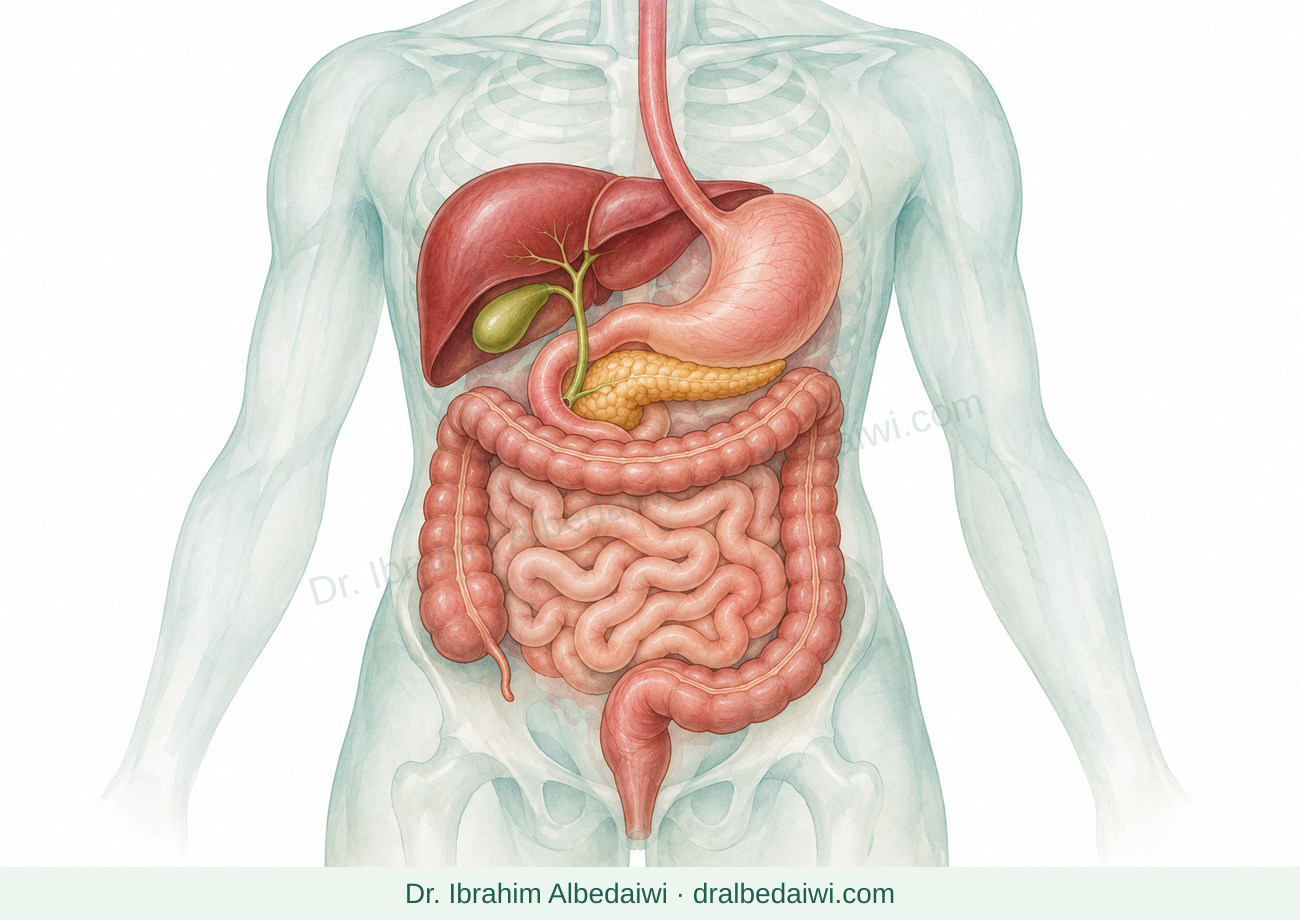

Digestive symptoms with weight-loss medicines
Content date: 15 November 2026
Practical guidance for digestive symptoms with medicines such as semaglutide and tirzepatide: symptom relief, warning signs and procedure planning.
Your next step
Record the product, dose, last increase and timing of symptoms.
Get urgent help: Persistent severe upper abdominal pain, especially radiating to the back; repeated vomiting with little urine; severe distension with no stool or gas; or fever with jaundice: seek urgent assessment now and advice before the next dose. Breathing difficulty or facial swelling: emergency care.
Which medicines does this guide cover?
- This guide focuses on GLP-1 medicines, including semaglutide and liraglutide, and the dual GIP/GLP-1 medicine tirzepatide. Products are prescribed for diabetes or obesity according to their licence. Doses, pens and food instructions are not interchangeable; this is not a guide to every weight-loss drug.
- They can slow stomach emptying and cause nausea, fullness, belching, reflux, constipation or diarrhoea, particularly when starting or increasing a dose. Symptoms may improve over time, but not every abdominal symptom should be attributed to the medicine.
Steps for mild symptoms
- Eat smaller portions slowly and stop when comfortably full. Reduce large or fatty meals and personal triggers, and avoid lying down straight after eating.
- Sip fluids according to your health needs and any prescribed restriction. Maintain protein, nutrition and suitable activity rather than starving yourself. For constipation without severe pain or vomiting, discuss gradual fibre and appropriate treatment; avoid starting several laxatives or nausea medicines yourself.
When should I discuss the dose?
- Contact the prescriber if symptoms persist or limit eating and drinking, especially before the next increase. They may adjust escalation, dose or treatment. Do not double a missed dose or restart a high dose after interruption without product-specific advice.
- Report gastroparesis, kidney disease, previous pancreatitis or gallstones and all other medicines. Pregnancy or pregnancy planning requires a separate discussion; stopping intervals and contraception instructions differ by product.
- Tirzepatide (Mounjaro) may make oral contraceptives less effective. If you use them, arrange a non-oral method or an additional barrier method with your clinician or pharmacist for the first 4 weeks of treatment and for 4 weeks following every dose increase. This is a product-specific instruction, not a rule for all weight-loss medicines.
Before endoscopy or anaesthesia
- Tell the endoscopy and anaesthesia teams the medicine, dose and last dose, recent initiation or escalation, and any nausea, vomiting or marked fullness. Food can remain in the stomach despite usual fasting.
- There is no single stop rule for everyone. Many patients can continue treatment; others need a liquid-diet plan, altered anaesthesia or postponement. Follow the centre’s written plan coordinated with your prescriber rather than an internet stopping schedule.
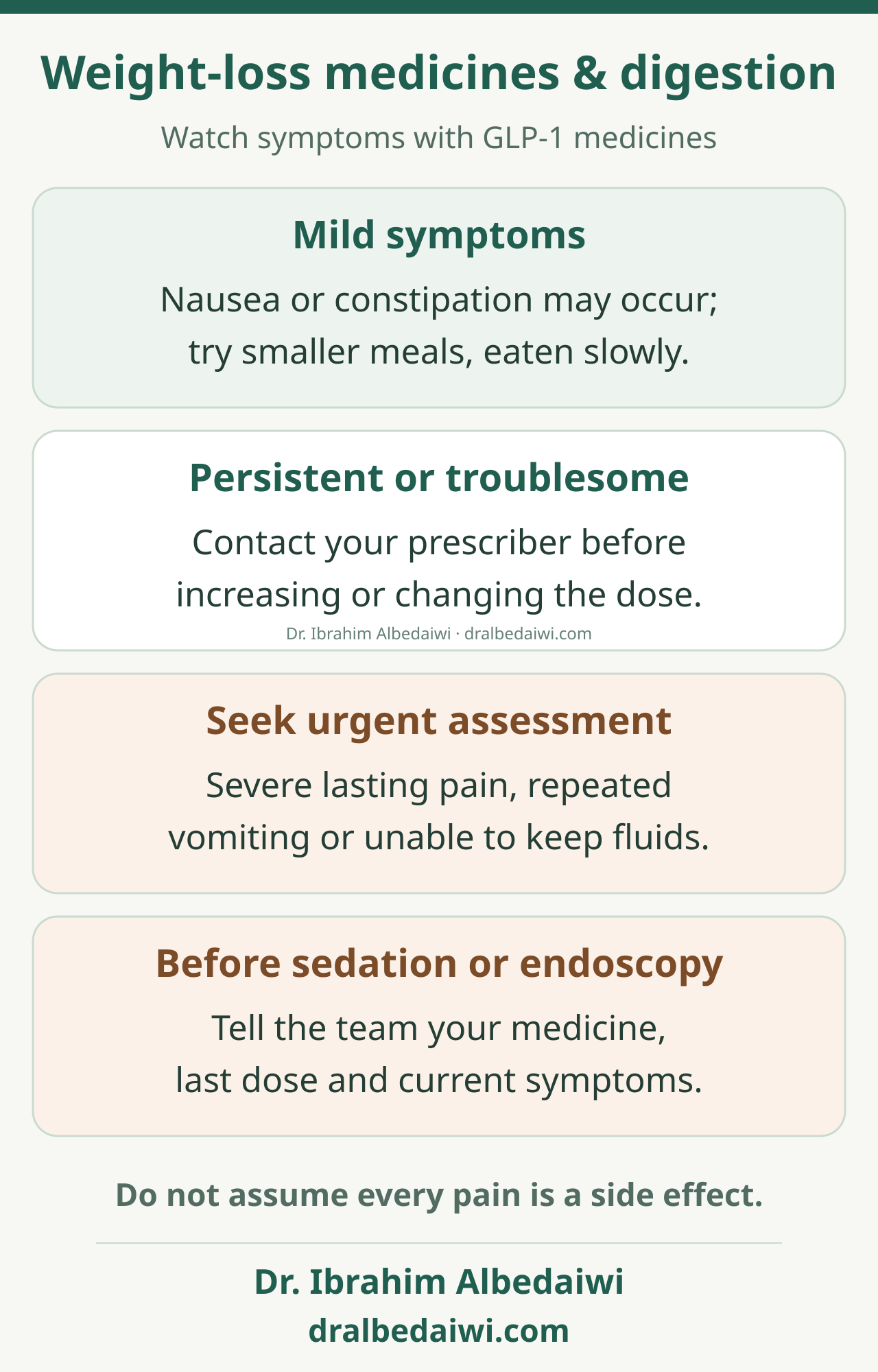
Weight-loss medicines & digestion
Read the illustration as text
Watch symptoms with GLP-1 medicines
- Mild symptoms: Nausea or constipation may occur; try smaller meals, eaten slowly.
- Persistent or troublesome: Contact your prescriber before increasing or changing the dose.
- Seek urgent assessment: Severe lasting pain, repeated vomiting or unable to keep fluids.
- Before sedation or endoscopy: Tell the team your medicine, last dose and current symptoms.
Do not assume every pain is a side effect.
When to get help
Persistent severe upper abdominal pain, especially radiating to the back; repeated vomiting with little urine; severe distension with no stool or gas; or fever with jaundice: seek urgent assessment now and advice before the next dose. Breathing difficulty or facial swelling: emergency care.
Persistent symptoms, poor food/fluid intake, constipation that is not improving, or symptoms before a planned dose increase.
Related guides
Gastroparesis: delayed stomach emptying
Constipation, difficult evacuation and bowel leakage