


Fibre and food for constipation
Content date: 14 November 2026
Gradually increasing fibre can help constipation, but persistent difficulty emptying may need another treatment.
Your next step
Add one fibre source gradually and monitor bloating and ease of passing stool.
Get urgent help: Severe or persistent pain with vomiting, distension or inability to pass gas; or heavy bleeding.
How much do I need?
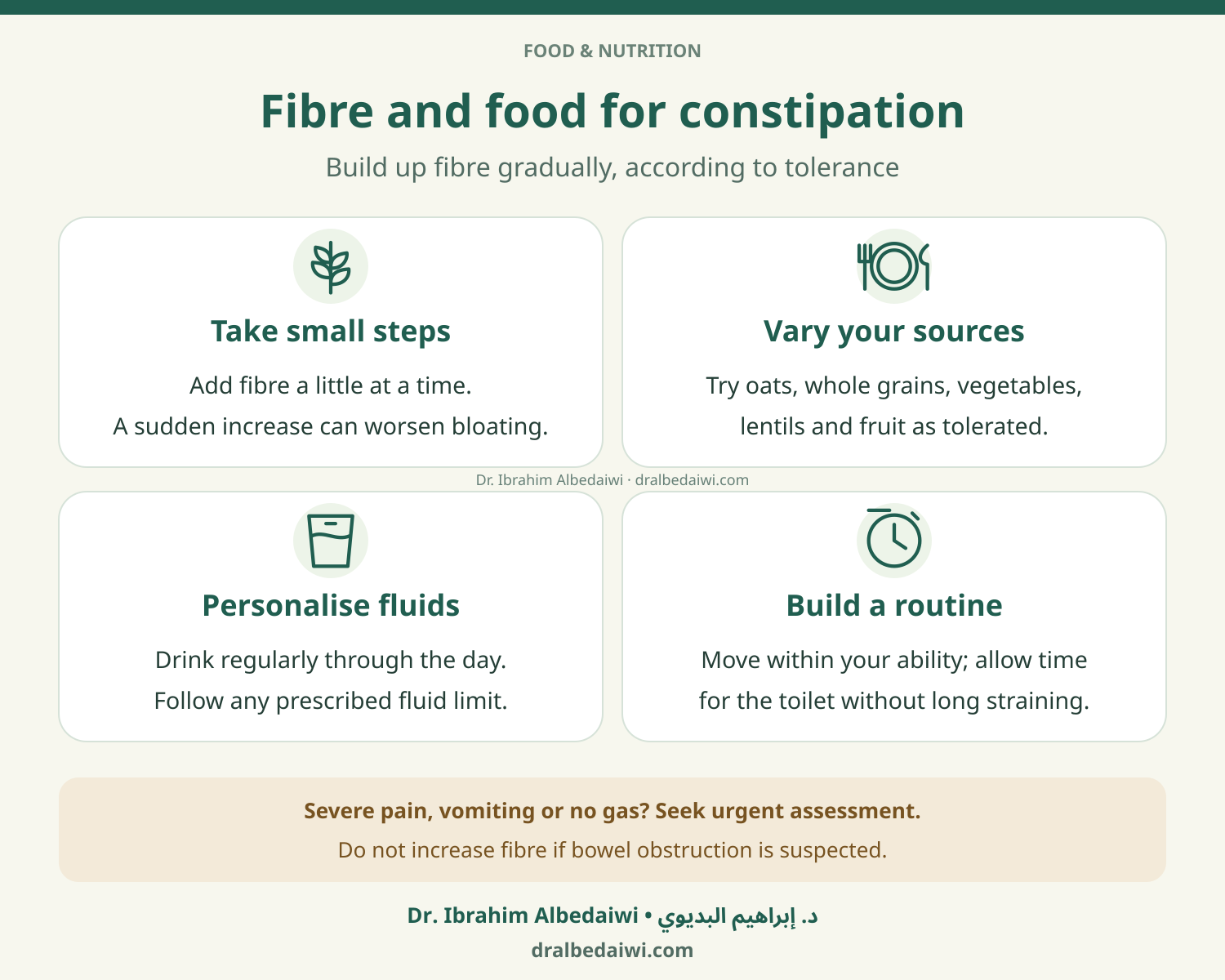
Many adults need about 22–34 g daily, depending on age and sex. This is a general range, not an individual prescription. Increase in steps.
Everyday food choices
Vary oats, wholegrain bread, vegetables, fruit and tolerated pulses. Start with a small portion of lentils or chickpeas if they cause gas.
Fluids and supplements
Drink according to your health, activity and climate, following any prescribed fluid restriction. Psyllium helps some patients; follow its instructions, never swallow it dry, and seek advice if swallowing is difficult.
When should I avoid adding more?
Seek advice first with a known stricture, suspected obstruction or a prescribed low-fibre diet. Soft stool that remains difficult to expel may reflect a pelvic-floor problem. More bran is not always the answer.
Practical choices
| Situation | Practical choice |
|---|---|
| Breakfast | Introduce oats or wholegrain bread gradually. |
| Main meal | Vegetables and tolerated pulses alongside protein. |
| Review | Reassess rather than endlessly adding fibre. |
When to get help
Severe or persistent pain with vomiting, distension or inability to pass gas; or heavy bleeding.
Persistent new constipation, blood in stool, weight loss or no improvement with your plan.
Related guides
Constipation, difficult evacuation and bowel leakage
Defecatory disorders and pelvic floor coordination