

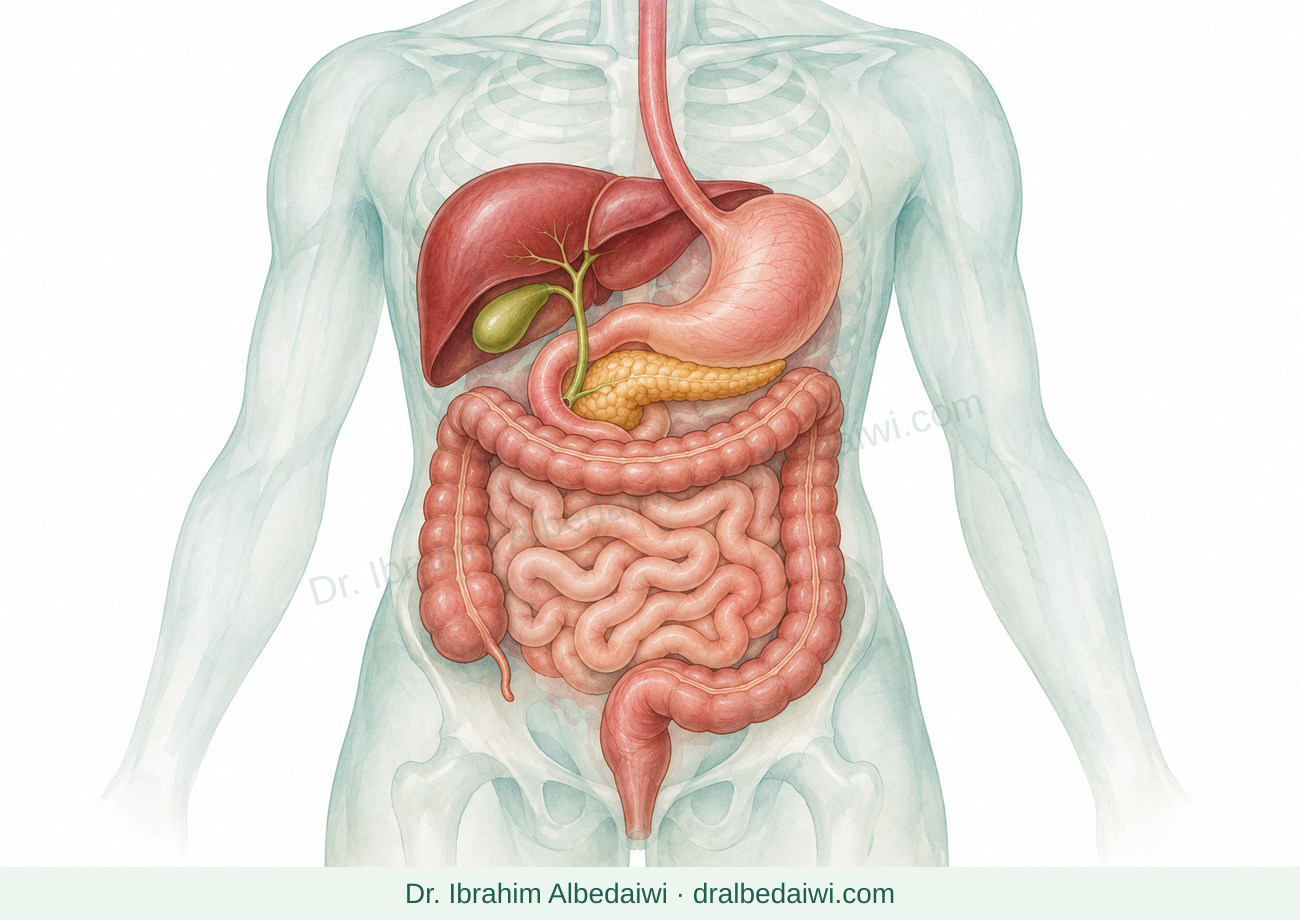

Portal hypertension and esophageal or gastric varices
Content date: 10 November 2026
Varices are enlarged blood vessels that can bleed; they are not cancer. Prevention and follow-up reduce risk. Vomiting blood or passing black stools is an emergency.
Your next step
Record your preventive medicine and next endoscopy date, and ensure your family knows the bleeding warning signs.
Get urgent help: Vomiting blood or black tarry stools, even without pain or dizziness: seek emergency care immediately and do not drive yourself. Severe pain, inability to swallow or fever after banding also needs urgent assessment.
How are the liver and varices connected?
- The portal vein brings blood from the bowel to the liver. Cirrhosis can obstruct flow, raising pressure and enlarging alternative vessels, particularly in the esophagus and stomach. This differs from arm blood-pressure readings and can have other causes, such as portal-vein blockage.
How is risk assessed?
- Blood tests, liver stiffness and imaging, and sometimes endoscopy, help assess risk. Your doctor determines whether and when endoscopy is needed according to your condition and treatment; one schedule does not fit everyone. Varices may cause no symptoms before bleeding.
How is bleeding prevented?
- Medicines such as carvedilol or propranolol may reduce portal pressure when suitable. Treatment depends on blood pressure, pulse, kidney function and tolerance. Do not start or change them yourself, and report dizziness or fainting.
- Esophageal varices may be treated with small bands during endoscopy, sometimes across several sessions. Gastric varices may require different treatment in a specialist center. After previous bleeding, medicines and banding may be combined to prevent recurrence.
What is TIPS?
- TIPS is a channel created within the liver by an interventional radiologist to lower portal pressure. It can help selected bleeding or ascites cases, but requires assessment of heart and liver function and encephalopathy risk. It may worsen confusion and needs ongoing follow-up.
After banding or hospital discharge
- Follow the team’s food, medicine and repeat-endoscopy instructions, and obtain a written plan for blood thinners and pain relief. Treating varices does not remove the underlying liver disease; a bleeding episode may prompt transplant evaluation.
When to get help
Vomiting blood or black tarry stools, even without pain or dizziness: seek emergency care immediately and do not drive yourself. Severe pain, inability to swallow or fever after banding also needs urgent assessment.
Repeated dizziness on treatment, inability to take medicines or no follow-up appointment after banding: contact the team promptly.
Related guides
Ascites: abdominal fluid and drainage
Hepatic encephalopathy: confusion and altered awareness
Liver transplantation: when is evaluation needed?