

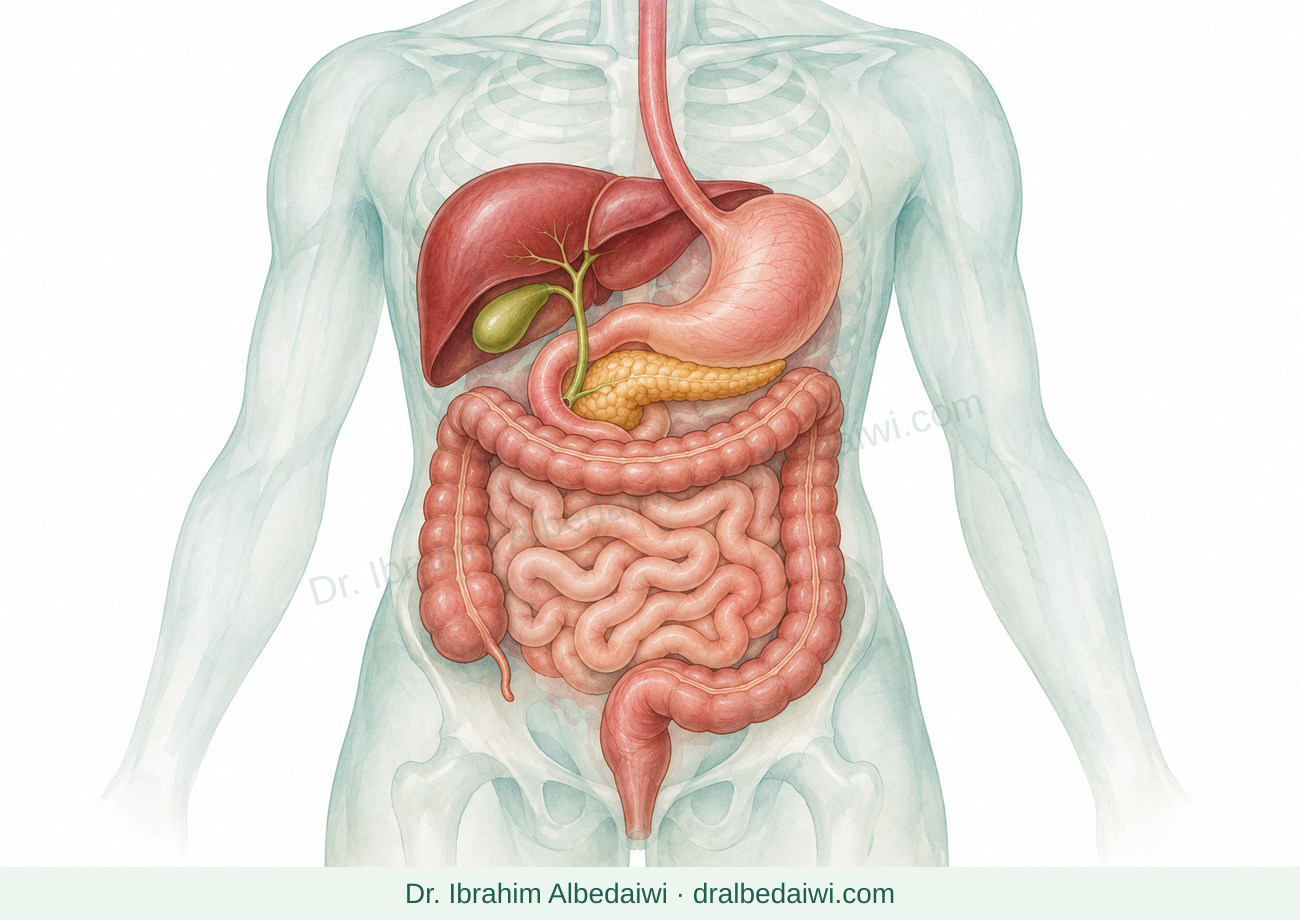

A gluten-free table
Content date: 14 November 2026
For confirmed celiac disease, avoid regular bread and pasta and choose gluten-free alternatives. Complete diagnostic testing before starting the diet unless your doctor advises otherwise.

| Food | A suitable choice | What should I check? |
|---|---|---|
| Kabsa or mandi | Rice and protein without a flour coating | Stock cubes, spices, additions and preparation |
| Jareesh, qursan and marqooq | A rice or corn alternative, or a certified gluten-free product | The traditional versions usually contain wheat; changing the sauce does not make them suitable |
| Bread and pasta | A product labeled gluten-free | Wheat, barley, rye, semolina and their derivatives |
| Oats | Certified gluten-free oats if suitable for you | Wheat contamination is common; review tolerance with the dietitian |
| Grilled meat and potatoes | Meat without flour coating and safely prepared potatoes | Marinade, sauce and shared frying oil |
| Milk, laban and fruit | Plain varieties without additions are usually suitable | Additives and flavourings; lactose intolerance is a separate issue |
Do not replace gluten with nutritional deficiency
Include protein, vegetables, fruit and suitable starches. Monitor iron and vitamins according to your plan, and do not rely only on gluten-free baked products.
At home or eating out: a cross-contact checklist
Say clearly: “I have celiac disease; I need gluten-free ingredients and preparation without cross-contact.”
| Check | Practical question or action |
|---|---|
| Ingredients | Ask about flour, stock, marinades and sauces—not just bread. |
| Cooking | Ask about shared frying oil and pasta water; use clean oil and water. |
| Preparation | Use clean surfaces and utensils; protect food from crumbs. |
| Toaster and spreads | Use a separate toaster or toaster bags; keep crumbs out of shared spreads. |
| If the kitchen cannot confirm | Choose a reliably safe alternative; removing bread from a prepared plate is not enough. |
Celiac: eating away from home
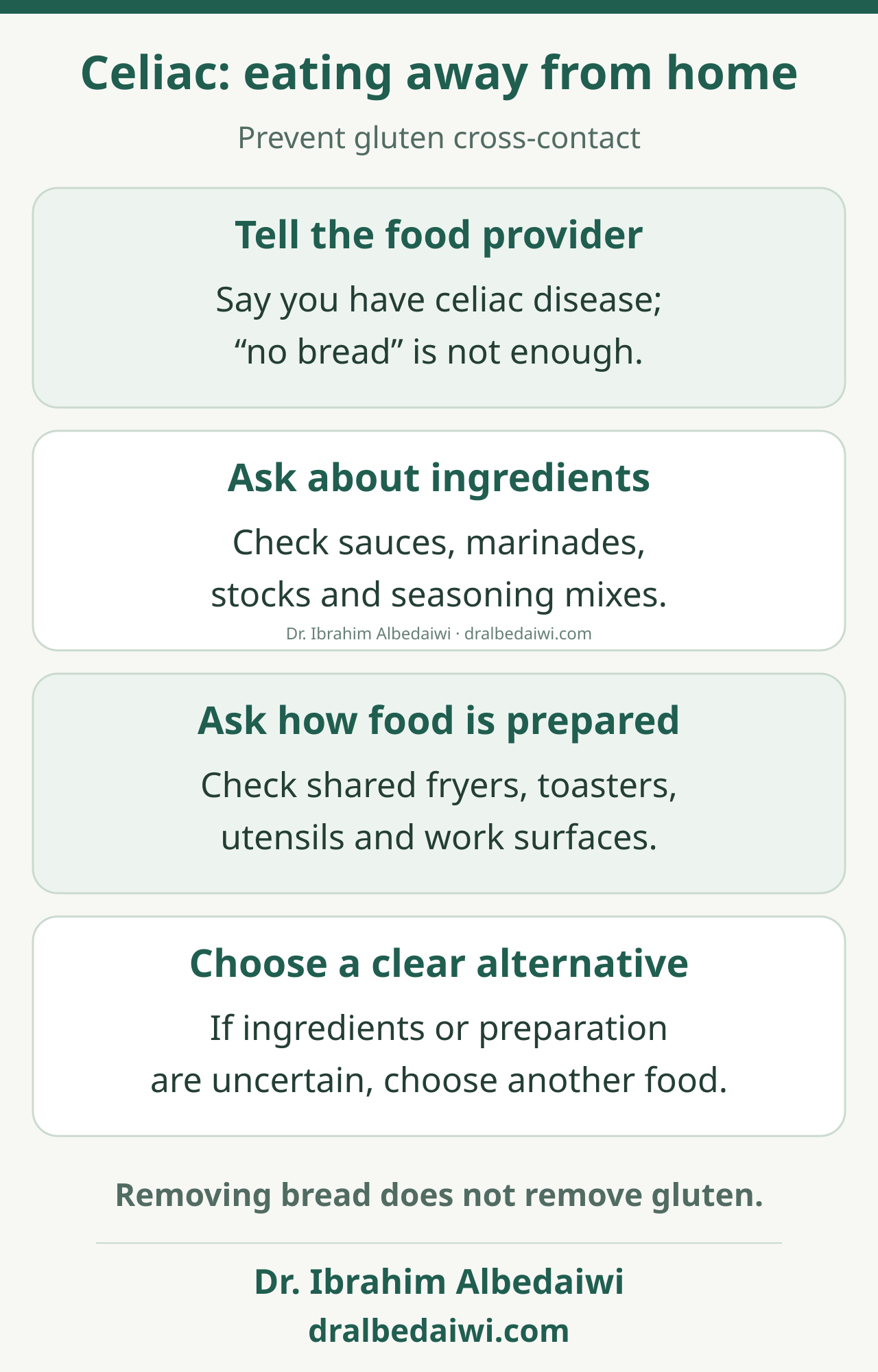
Read the illustration as text
Prevent gluten cross-contact
- Tell the food provider: Say you have celiac disease; “no bread” is not enough.
- Ask about ingredients: Check sauces, marinades, stocks and seasoning mixes.
- Ask how food is prepared: Check shared fryers, toasters, utensils and work surfaces.
- Choose a clear alternative: If ingredients or preparation are uncertain, choose another food.
Removing bread does not remove gluten.
Celiac disease: a gluten-free diet
Avoid regular bread and pasta. Choose gluten-free alternatives. After the diagnosis is confirmed, the diet must continue even when symptoms disappear.
Avoid gluten after diagnosis
Use reliably gluten-free foods and check wheat, barley, rye and hidden sources.
Prevent cross-contact
Use a separate toaster, clean preparation surfaces and check shared frying oil.
Choose safe alternatives
Naturally gluten-free starches
Rice, corn, potatoes and quinoa. Choose bread and pasta labeled “gluten-free”.
Simple, varied foods
Vegetables, fruit, legumes, eggs, fish and meat without flour coatings or sauces containing gluten.
Dairy and oats
Plain dairy as tolerated. Use oats only if labeled “gluten-free”, in consultation with your dietitian.
Avoid gluten
Grains that contain gluten
Wheat, barley and rye, including bulgur, semolina, freekeh and wheat-based jareesh.
Their usual products
Bread, pasta, biscuits and cakes, unless they are reliable gluten-free alternatives.
Hidden sources
Check for barley malt and check sauces, soups and marinades. Read the label every time.
Prevent cross-contact from crumbs
Clean surfaces and utensils. Use a separate toaster and avoid frying oil shared with flour-coated foods.
Ask at restaurants
Explain that you have celiac disease and ask about ingredients and preparation. “Wheat-free” does not always mean “gluten-free”.
Do not start the diet before completing celiac testing. Improvement in symptoms does not mean the disease has gone away; continue follow-up.
Guides for your care journey
Read the related guides together: