

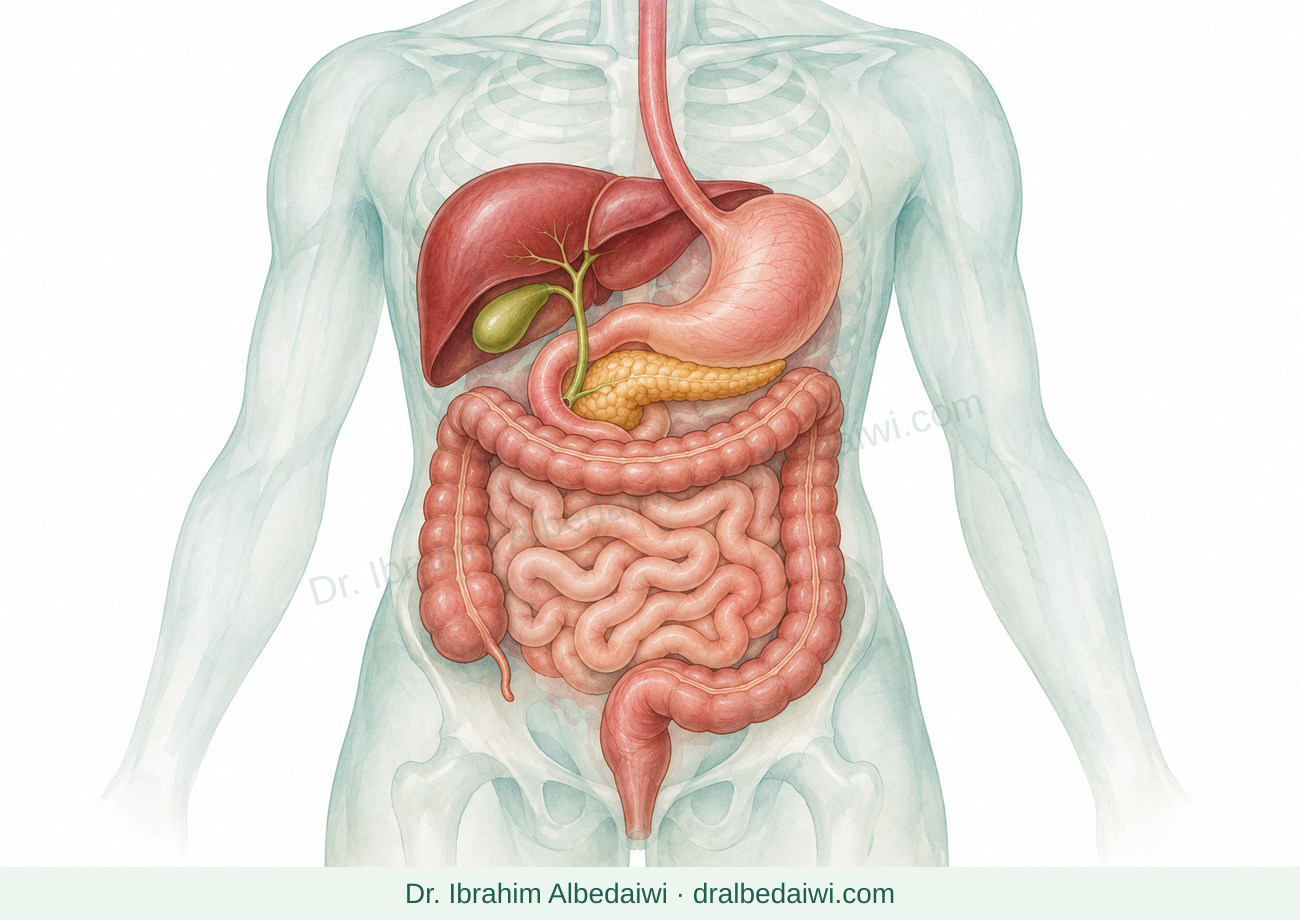

Nutrition with pancreatic enzyme insufficiency
Content date: 14 November 2026
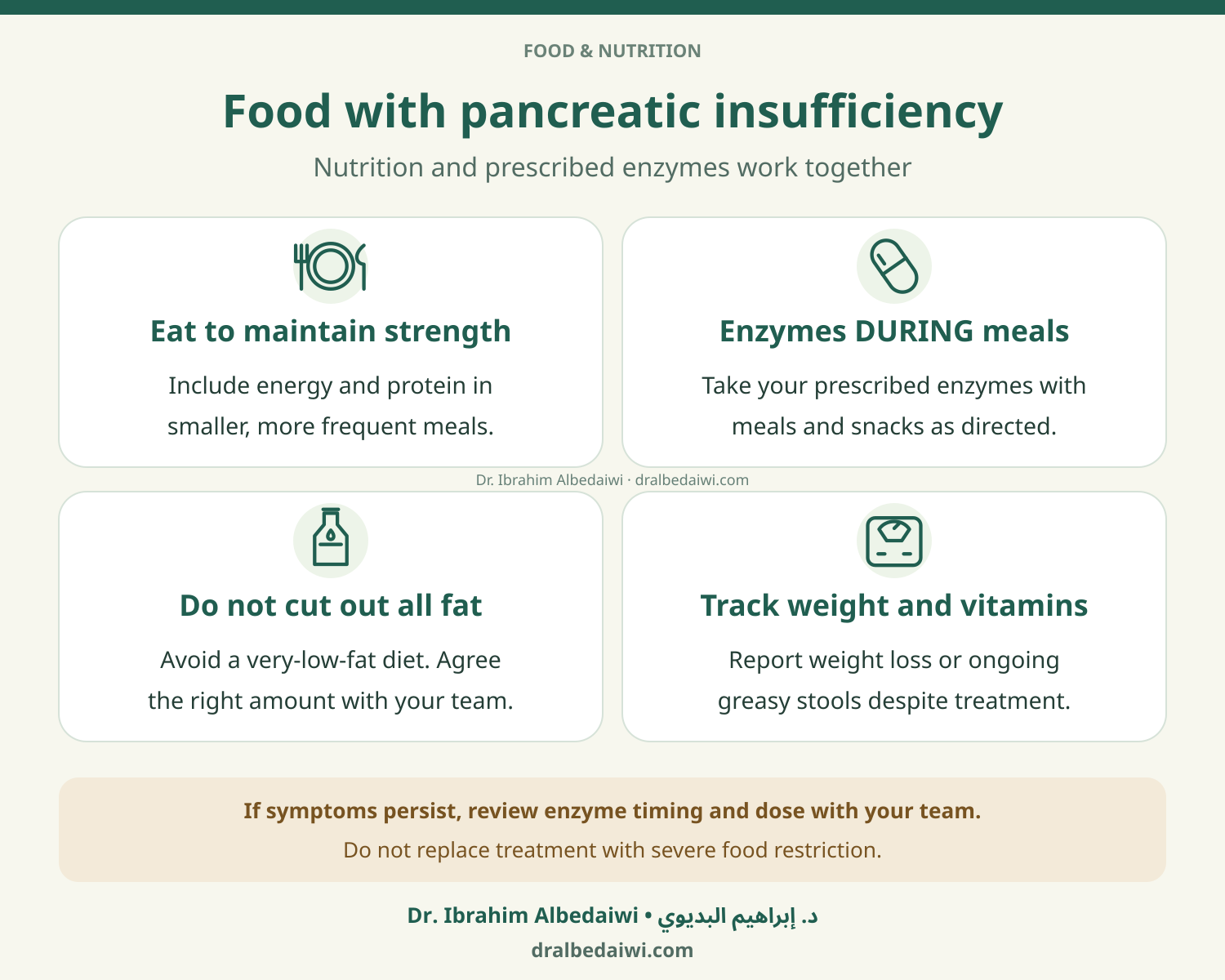
Adequate food and prescribed pancreatic enzymes help nutrient absorption and weight maintenance.
Your next step
Take prescribed enzymes during meals and note greasy stools or weight loss for review.
Get urgent help: New severe upper abdominal pain with vomiting, fever or jaundice; do not manage it with diet alone.
Who is this for?
For pancreatic enzyme insufficiency, including some people with chronic pancreatitis or after pancreatic surgery. It does not set the diet for an acute pancreatitis episode.
Enough food without eliminating fat
Maintain protein and calories, using smaller meals if helpful. Agree an appropriate fat intake; an extremely low-fat diet can worsen nutritional and vitamin deficiencies.
Enzymes with food
Take replacement enzymes during meals and relevant snacks as prescribed. Capsule counts are not interchangeable: products, strengths and meal sizes differ.
Monitor the response
Persistent greasy stools or weight loss calls for review of timing, dose and other causes, rather than further food restriction. Vitamins A, D, E and K and bone health may need monitoring. Avoid alcohol and smoking.
Practical choices
| Situation | Practical choice |
|---|---|
| Meal | A protein and energy source you tolerate. |
| Enzymes | During food, at the prescribed dose. |
| Follow-up | Review weight, stools and vitamins with your team. |
When to get help
New severe upper abdominal pain with vomiting, fever or jaundice; do not manage it with diet alone.
Ongoing greasy stools or diarrhoea, weight loss or difficulty obtaining enzymes.
Related guides
Pancreatitis and pancreatic enzyme insufficiency