


Gastroscopy
Content date: 15 November 2026
An upper endoscopy uses a thin flexible camera to examine the esophagus, stomach and duodenum.
What can a gastroscopy see?
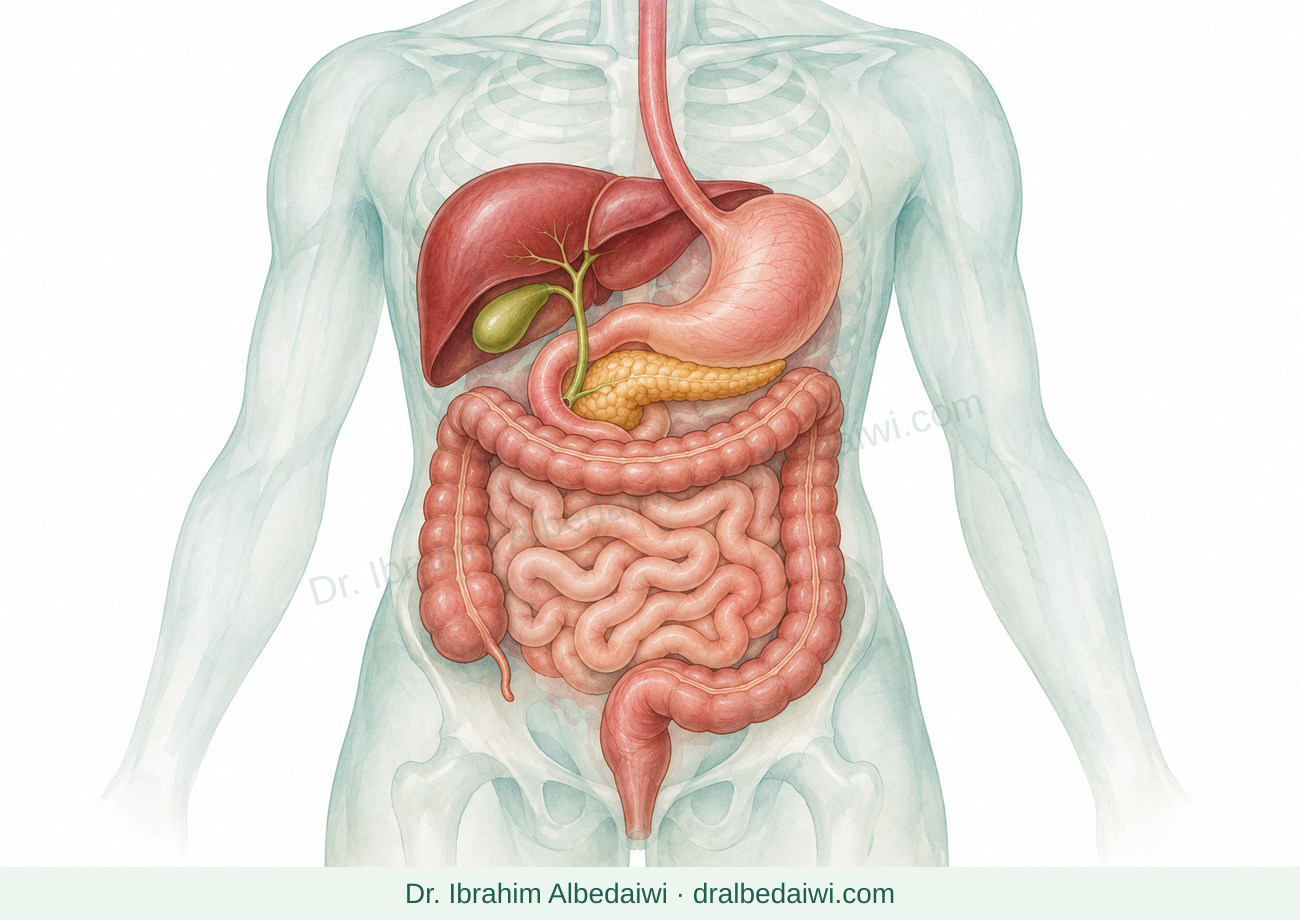
- A thin flexible tube with a camera and light allows direct inspection of the esophageal, stomach and duodenal lining. It does not examine the colon or show every abdominal organ. It may help diagnose inflammation, ulcers or narrowing, and treat bleeding or dilate a narrowed area when necessary.
- Small samples may be taken even when the lining looks normal because some conditions are identified only under a microscope. The initial endoscopy report therefore differs from the later biopsy result; taking a sample does not mean the doctor found cancer.
See the medical illustration (NIH / NIDDK)

Why is it performed?
- To assess swallowing difficulty, bleeding, anemia or other symptoms, and to take biopsies or treat certain problems. A biopsy is a small tissue sample and does not mean cancer is present.
What happens during the examination?
- A throat spray or intravenous sedative may be used according to the plan, while breathing and pulse are monitored. The scope passes through the mouth into the esophagus and usually does not block breathing.
- You may burp, feel bloated or have a mild sore throat afterwards. Uncommon risks include bleeding, perforation, stomach contents entering the lungs or a reaction to sedation; some risks increase with therapeutic procedures.
Regular medicines before endoscopy
Review your complete medicine and supplement list with the endoscopy unit at least a week before the appointment, and earlier if a longer interruption may be needed. Get a written plan for every medicine that needs adjustment.
- Medicines that may continue: Examples include amlodipine or bisoprolol for blood pressure, levothyroxine for thyroid disease and levetiracetam for epilepsy, according to the team’s plan. Bring asthma inhalers. Fasting does not mean stopping every medicine.
- Taking an approved dose: Use a small sip of water at the agreed time. Any dose after the drinking cutoff needs explicit instructions from the unit. Do not independently stop seizure medicines, long-term steroids or transplant medicines.
- Medicines needing a separate plan: Insulin and diabetes medicines, including SGLT2 and GLP-1 medicines, diuretics and some heart and blood-pressure medicines. The team sets what to continue or hold and when to restart. Do not stop all insulin yourself.
- Blood thinners: Examples include warfarin, apixaban and clopidogrel. Any interruption or adjustment needs an agreed plan from the prescribing doctor and gastroenterologist. Low-dose aspirin usually continues for most endoscopic procedures.
- Acid suppressants (PPIs and P-CABs): For planned H. pylori testing, confirm with your team whether to hold PPIs or potassium-competitive acid blockers such as vonoprazan for two weeks before testing. Test for cure at least four weeks after the last antibiotic or bismuth dose. Follow your team’s instructions if you need ongoing treatment or urgent endoscopy.
Full guide: my medicines before endoscopy, interruption and restarting
How do I prepare for gastroscopy?
What happens on procedure day?
- Check in at the endoscopy unit. The nurse reviews your preparation, fasting, medicines and allergies, checks your vital signs and places an IV line if needed for sedation or medicines.
- The team explains the procedure and confirms your consent. The examination time varies with the inspection needed, biopsies and any treatment. Ask the unit how long to allow for your visit; the examination is only part of that time.
- After sedation, expect about an hour in recovery. The team checks how you are doing and decides when it is safe to go home. Check-in and recovery add to the total time at the unit.
The doctor uses the scope to diagnose problems and can treat some of them during the same examination. Based on the findings and the agreed plan, the doctor may take small tissue samples (biopsies), stop bleeding, band enlarged veins (varices), widen a narrowed area (dilation), or perform another treatment if needed.
What to expect with moderate sedation
A sedative is usually given through a vein. You may feel relaxed and sleepy, and you can usually respond to your name or a simple request. You generally breathe on your own and may remember little of the examination. The team monitors breathing, oxygen level, pulse and blood pressure. Tell the team if you feel pain or discomfort. Your team will discuss whether throat spray, deeper sedation or another option is more suitable.
Possible complications
Serious complications of routine diagnostic endoscopy, such as perforation, are very rare. Serious complications from sedation are also very rare. The procedure can cause bleeding or a tear in the wall (perforation), and infection is possible. Sedation can lower oxygen or blood pressure, and stomach contents can enter the lungs (aspiration). The team monitors for these problems and treats them promptly. Risk varies with your health and what is done during the procedure. In a large endoscopy registry using different sedation methods, serious sedation complications occurred in about 1 in 10,000 procedures. Brief drops in oxygen or blood pressure can be more frequent.
When to get help
Severe or increasing chest or abdominal pain, shortness of breath, fever, vomiting blood, black, tarry stools even without dizziness, or severe new swallowing difficulty after the procedure.
If you are unsure about fasting or medicines, call the unit before fasting.
Guides for your care journey
Read the related guides together:
Related guides
Gastroscopy preparation checklist