

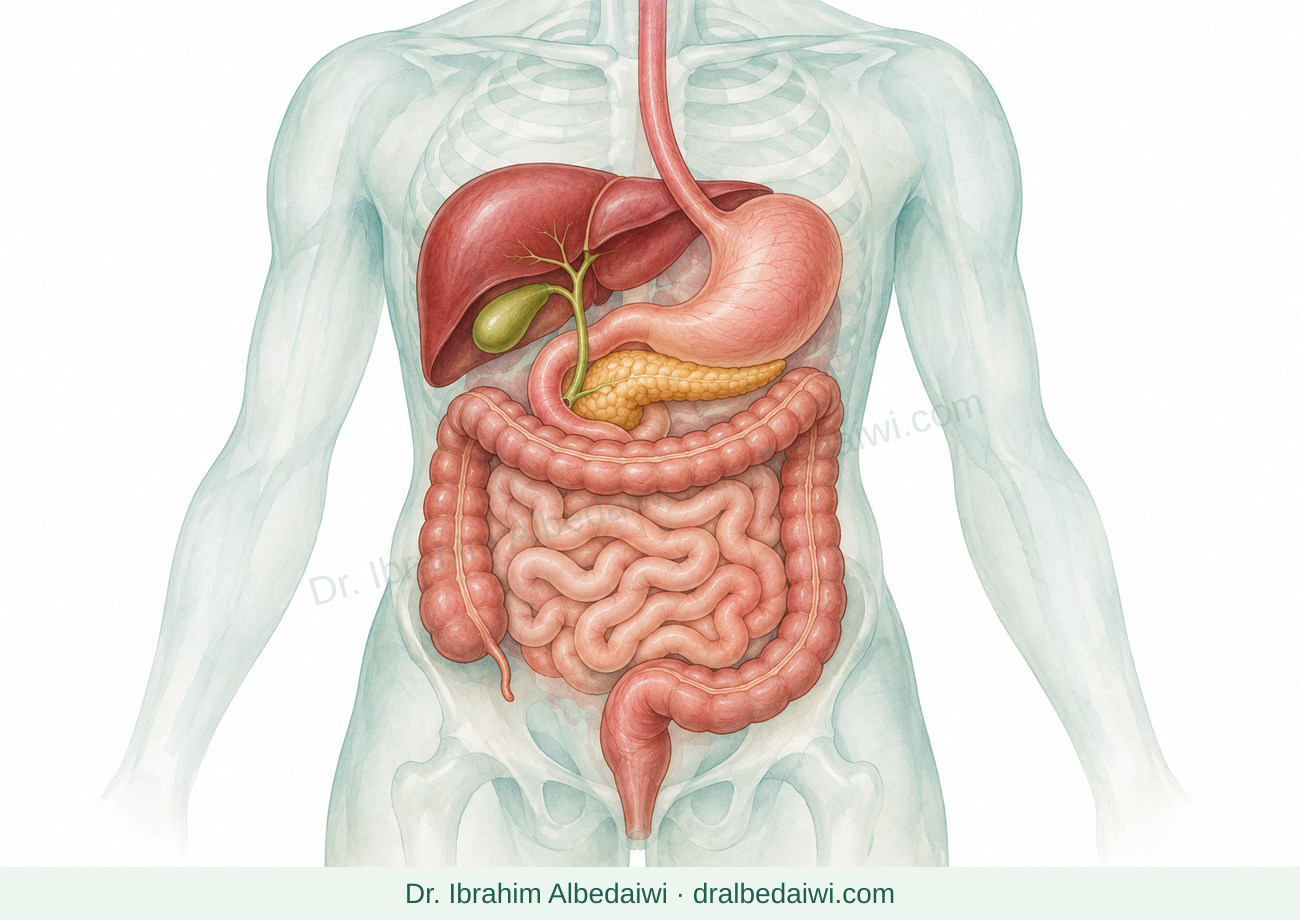

Lactose intolerance: practical food choices
Content date: 14 November 2026
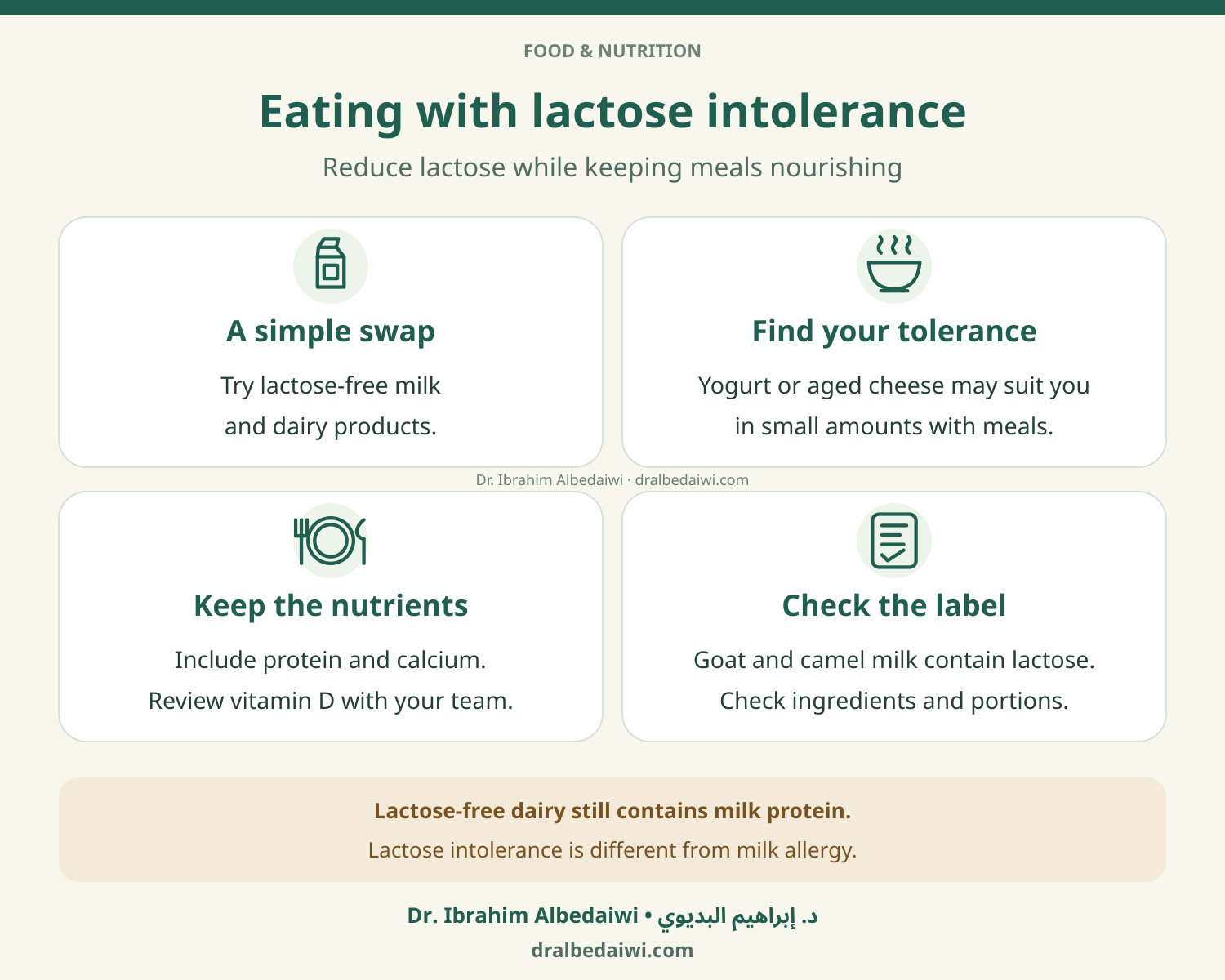
Reducing lactose to your own tolerance often controls symptoms without excluding every dairy food.
Your next step
Try one change, such as lactose-free milk, and note the portion and symptoms.
Get urgent help: Breathing difficulty, facial swelling, significant bleeding or severe dehydration.
Who is this guide for?
For people with assessed or suspected lactose intolerance. Persistent diarrhoea or weight loss needs evaluation for other causes.
Find your tolerance gradually
Small amounts with food, yoghurt or some aged cheeses may be tolerated. Tolerance varies by person and product. Lactase products may help; ask your pharmacist or clinician how to use them.
Protect your nutrition
Compare protein, calcium and vitamin D in alternatives; plant drinks are not nutritionally interchangeable. Discuss supplements if needed.
Intolerance is different from allergy
Lactose-free milk still contains milk protein and is unsuitable for someone who must avoid that protein because of allergy. Facial swelling or breathing difficulty after food needs urgent care.
Practical choices
| Situation | Practical choice |
|---|---|
| Regular milk | Try lactose-free milk. |
| Yoghurt and cheese | Test the type and amount you tolerate. |
| Plant drink | Choose calcium/vitamin-D fortification and check protein. |
When to get help
Breathing difficulty, facial swelling, significant bleeding or severe dehydration.
Persistent symptoms despite changes, weight loss or difficulty meeting nutritional needs.